Unfairness fuels conflict: fraying threads

Perceived unfair treatment is a driver not just of resentment but of outright conflict. Unfairness destabilises our world.

That’s the clear conclusion of some recent research by an IMF economist and a professor at Rice University in Houston in the US. Their focus is sub-Saharan Africa, a region with disproportionate levels of conflict and human suffering, whose violence fuels emigration and so more instability elsewhere. But it seems sure that while there unfairness fuels outright military conflict, the logic must be that in other parts of the world unfairness will drive unrest and discontent in different forms. The researchers refer to “conflict-inducing alienation”. That alienation can be seen in many countries of the world, not just sub-Saharan Africa.

But sticking first with their area of focus, the blog that accompanies the launch of the paper summarises the researchers’ findings:

“While various factors can fuel conflict, our research shows that discontent with state institutions among marginalized groups is a key driver of unrest in the region. Such distrust reflects perceptions that governments fail to address equity issues and inclusive growth—including the fair allocation of natural resources and human capital development… Poverty and underdevelopment alone may not fuel conflict. But those underlying factors are exacerbated by the experience or perception of social and economic exclusion, thus providing a fertile breeding ground for armed groups, necessitating urgent intervention.”

These countries in sub-Saharan Africa are of course among the first to experience the most brutal impacts of climate change, and this exacerbates the experiences of those at the edges of society. “Climatic fluctuations and food insecurity have been particularly acute in this subregion,” the paper reads. “Forecasts for 2023 indicate that nearly 142 million individuals in the region will confront acute food insecurity.” It should not be a surprise that “Food insecurity contributes negatively to trust in government.” Also unsurprisingly, the desperation that arises from this hunger drives individual actions, especially among those who have lost trust in governments. It must of course be noted that much of the poverty in the region is a legacy of colonialism.

The consequences of this are stark. Essentially, there is a close correlation between the sense of exclusion and unfairness and the fragility of nation states and their susceptibility to conflicts of various forms. This chart from the paper illustrates the finding well:

The researchers conclude:

“Our findings show that the crisis of confidence experienced by marginalized groups towards state institutions is the primary driver of conflict. This crisis of confidence originates from the perceived failure of state institutions to safeguard interests, ensure justice, promote human capital development equitably, oversee fair allocation of natural resources, and encourage inclusive economic growth. Such institutional failures, contributing to perceptions of social and economic exclusion, invite conflict as they undermine the principles of fairness and inclusivity vital for sustainable development.”

These findings emphasise the importance of the Rule of Law in fostering trust in government and so in building the foundations for economic growth and investment. And there is a clear need to foster the basic expectations of a cohesive society in order to lean against these perceived unfairnesses: “These results suggest strongly that governments in the Sahel G5 as well as sub-Saharan Africa more broadly should focus their efforts on improving the quality of their institutions (reduce corruption and improve law and order) and provision of public goods (healthcare, education, air and water quality, food and shelter sufficiency) rather than focus primarily on macroeconomic variables such as the levels of economic growth and unemployment.”

The sense of being forgotten and left behind by government and wider society is greater for those at the geographic edges: “conflict is often concentrated near national borders where there tend to be more limited or insufficient public services, fostering feelings of exclusion”. Many of those national borders were drawn with the arbitrary straight lines of empire.

That sense of living at the periphery, having been forgotten by government and wider society, is of course not unique to people in the countries of sub-Saharan Africa. Many in all the countries of the world now feel left behind and peripheral. In sub-Saharan Africa these frustrations appear to be reflected in outright conflict but in other parts of the world the same sense of abandonment has inevitable, if different, consequences. The consequential violence can fuel crime, it can drive social division and anger in and with politics, but these are just other forms of the violence and dislocation that comes from people feeling that society no longer operates fairly to protect their interests.

Perceptions of fairness seem to be vital to hold states and their people together in peaceful coexistence.

See also: The Rule of Law is fairness

Lessons from Argentina, and Copperfield

The centre cannot hold

Fraying Threads: Exclusion and Conflict in Sub-Saharan Africa, Hany Abdel-Latif, Mahmoud El-Gamal, IMF WP/24/4, January 2024

How Distrust of Government by Marginalized People Fuels Conflict in Africa, Hany Abdel Latif, Mahmoud El Gamal, IMF Blog, January 25 2024

The Rule of Law and investor approaches to ESG: Discussion paper, Paul Lee, Bingham Centre for the Rule of Law, September 2022

Note: in case it is not already sufficiently clear (looking at you, anonymous US company), I am happy to confirm that the Sense of Fairness blog reflects solely my personal views

Operating on purpose – hampered by inequality

Inequality is getting in the way of delivering value through corporate purpose statements. It’s an unusual form of inequality – inequality of inspiration, perhaps due to cynicism that arises from unfair treatment of the workforce.

The debate on the value of company purpose statements goes on. Fans of the approach believe it offers companies a route to providing a clear message to their investors and to their workforce about what the company stands for and is seeking to deliver, serving as a rallying point to shape their interactions. For those unpersuaded, corporate purpose looks like more of a fad, a set of at-best fine words that make no difference to how the company has always operated.

Such cynicism is perhaps encouraged by the poor quality of so many corporate purposes. One thing I am repeatedly struck by when reading the shortlisted annual reports of companies considered for the IR Society awards is that even at these companies with apparently exemplary reporting, several have weak or meaningless purposes. Many are so abstract as to be empty fluff while others are strikingly mundane or focus on financials. Few actually strike the right balance of providing a rallying point for shareholders and employees and assisting their decision-making, including notably assisting decisions about what the company, and individual employees, should not do. These are central elements of what an effective purpose should be.

Recent analysis suggests that this failure to inspire employees may mean corporate purpose fails to deliver on its potential.

The debates on purpose were opened up again at a conference late last year entitled Modern Capitalism and Corporate Purpose, hosted by Copenhagen Business School and organised alongside the ever-excellent European Corporate Governance Institute (ECGI). ECGI recently published a user-friendly summary ably written by my friend George Dallas. One of the key speakers at the conference was Claudine Gartenberg, assistant professor of management at the University of Pennsylvania’s much admired Wharton School. Dallas reports her being still more dismissive than I am about many existing corporate purpose statements, calling them both “twaddle” and “word salads of nothing”.

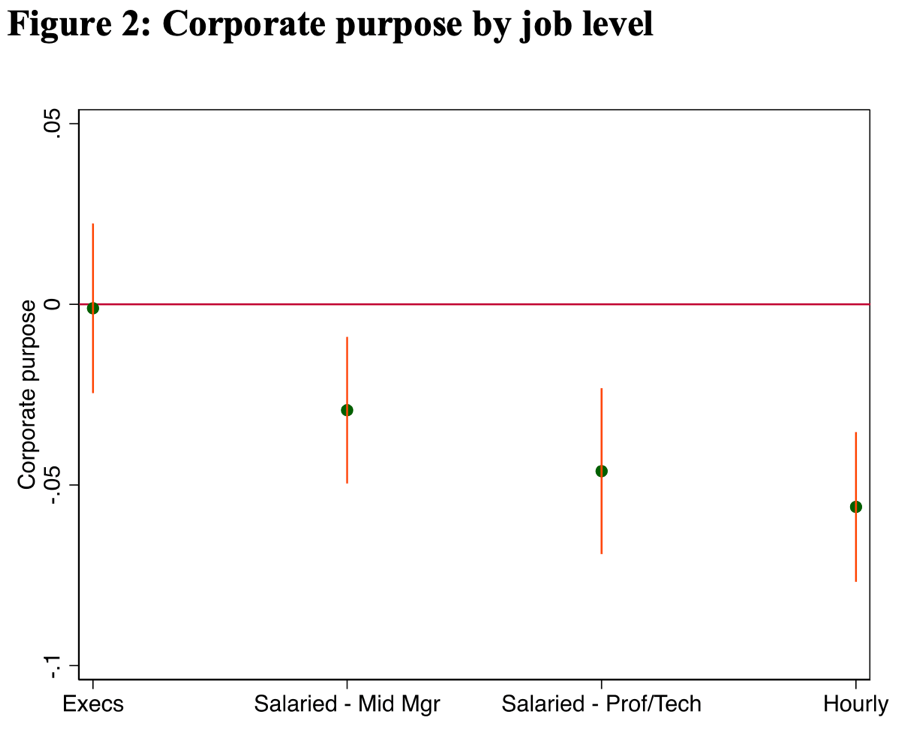
Gartenberg discussed the key results of a recent study into purpose at both public and private companies. This found that employees of public companies have a lower sense of purpose than those of private companies, and the difference is driven by more junior employees (ie middle managers, professional salaried staff and hourly workers rather than those at the executive level). And, as the chart shows, this situation of what she calls ‘purpose inequality’ is reflected in a rapid deterioration in the sense of purpose as you go down the seniority grades in these organisations:

In an earlier paper, Corporate Purpose and Financial Performance, Gartenberg showed that it is clarity of purpose in the middle ranks of an organisation that can lead to company outperformance. That has to make sense: clarity of purpose can assist with board decision-making (perhaps particularly about activities that the company as a whole should not be doing), but really the value of purpose lies in its providing inspirational rallying power for employees, and helping them in their day-to-day decision-making. Where corporate purpose statements fail to inspire employees they will not convince others and will be only so much ‘twaddle’.

The fact that the evidence on purpose inequality indicates that there is not just a step-change in faith in corporate purpose below the executive level, but a steady deterioration as the study considered more junior members of the workforce, is suggestive that in part staff consider their own treatment when thinking about the corporate purpose. A company that isn’t fair to its own workers isn’t likely to inspire them to believe that it is animated in all its actions by a higher purpose – meaning that it is much less likely to achieve its purposeful aims.

A similar finding in a different industry with different ownership structures strongly suggests that this finding of detrimental effects from limited faith among the broader workforce in purported purposes can be seen as potentially broadly generalisable. This evidence is from the legal profession, and comes from work by LexSolutions and the Law Firm Maturity Index. This shows a sharp disconnect between the faith in a law firm’s stated purpose as seen through the eyes of its leadership (partners, directors or board members) and of its broader staff base (professional lawyers below partner level, generally referred to as associates) – and an apparent correlation between this and these individuals’ sense of wellbeing.

As their article on these findings indicates:

“This suggests a causal connection between the reality of a firm’s purpose and the health of its people…Low levels of wellbeing that arise from primarily pursuing a financial purpose may eventually lead to burnout or staff turnover.” [my emphasis]

Gartenberg’s evidence regarding the differences in employee attitudes in private companies in comparison with public ones (and ones with high levels of private equity ownership) is also telling. It suggests that generally employees are less persuaded that purpose is meaningful in the latter organisations, perhaps as they suspect that the profit motive will always be allowed to override all other considerations. Thomas Thune Andersen, chair of Denmark’s energy business Orsted, which has transitioned into renewables, who also spoke at the conference, tended to agree with this. He clearly felt that the support of the government as a majority shareholder had enabled Orsted to deliver on its purpose. Andersen was cynical about the short-termism of mainstream institutional investors.

If owners tend to be driven by things other than corporate purpose, and are not keen to encourage companies to establish purposes and be driven by them, then it is not surprising that the workforce will doubt the sincerity with which the company operates. Of course there are many investors that do have some confidence in the power of purpose and its value for long-term shareholders as well as stakeholders. But it seems that their voices are overwhelmed by a broader market of institutions that are less convinced – at least in the US, where Gartenberg’s work was carried out.

Purpose won’t deliver on its potential positive effects unless it is believed in by those within the company. But purpose inequality won’t be overcome by fiat, but persuasion, and demonstration in practice. In order to deliver, corporate purposes need not only to be better written and more meaningful statements of intent, but that intent needs to be followed through by boards and management in their treatment of staff, and also supported by investors in the business. Failures to deliver on either or both of these elements may serve to explain why there isn’t stronger evidence of the value of corporate purpose.

That redoubles the challenge for boards: live the purpose, demonstrably to your workforce, and reinforce it to your investors too. As I’ve suggested in previous blogs on this topic, there is an opportunity for companies through their actions to influence their shareholder base, discourage those shorter-term voices and encourage the longer-term institutions that will provide more reliable and consistent support. Boards should rise to that challenge, minimise purpose inequality and awaken the opportunities offered by meaningful corporate purposes.

See also: What’s the purpose of purpose?

Summary Report: Modern Capitalism & Corporate Purpose, ECGI, December 2023

Corporate Purpose in Public and Private Firms, Claudine Gartenberg, George Serafeim, Management Science Vol 69 No 9, September 2023

Corporate Purpose and Financial Performance, Claudine Gartenberg, Andrea Prat, George Serafeim, Organization Science Vol 30 No 1, January 2019

LexSolutions

Lessons from the Law Firm Maturity Index, Manu Kanwar, Stuart Woollard, Legal Business World, No 1, 2024

Fair, free and equal?

How can we move to a fairer society? First, we must imagine it, argues a new book. And the best starting point for such imagination, it suggests, is the philosophy of John Rawls. The new book is Free and Equal by Daniel Chandler, an economist and philosopher at the London School of Economics.

The book is well worth reading. Its subtitle is the ambitious What would a fair society look like? The ambition is clear, and bracing – though it’s less clear that its relatively conservative prescriptions live up to it.

Chandler sets out a great and concentrated version of his arguments in the first 25 minutes of a discussion hosted by the Royal Society for the encouragement of Arts, Manufactures and Commerce (RSA for short). Fundamentally, his aim is to bring back into active discussion the Rawlsian version of fairness. This vision was based in Rawls’s thought experiment of designing a society when one’s position in it was hidden behind a veil of ignorance. Rawls argued that such a society would be shaped by two basic principles of justice, the first protecting basic liberties and the second coming in two parts, fair equality of opportunity and the difference principle, which allows inequality to the extent it operates to benefit even the least well off in society. Chandler also points to a relatively neglected (frankly, by Rawls as well as others) third principle, the sustainability principle, which focuses on the need for intergenerational fairness.

Needless to say, a Rawlsian fair society would look very different from the one in which we live now. A fair society would require all of us to participate in it equally – with the participation as important as the equality.

Chandler puzzles why Rawls’s thinking has not previously shaped much political thinking, and suggests this is largely down to the shyness and lack of political engagement of the man himself. Maybe, but to me some of Rawls’s work seems to read as a slightly self-satisfied justification of the societal success of the US liberal property-owning democracy of the 1950s and 1960s, in which his thinking was developed – and it seems ignorant of the possibility that some parts of society (notably black people and women) might not have been well-served over that time. Certainly, Rawlsian thinking seemed to be swept aside as Chandler notes by the Reaganite and Thatcherite revolution of the 1980s.

That Thatcherite revolution and its ongoing echoes certainly leave scope for a more radical reading of Rawls, and for its use as a basis for the foundations of a reshaped political approach – and a reshaped society. Whether Free and Equal fully delivers on that is debatable. Many of its prescriptions are ones with much common currency; as Ryan Shorthouse, executive chair of conservative thinktank Bright Blue, indicated in an excellent recent webinar hosted by the Fairness Foundation and KCL’s Policy Institute:

“I thought that at times maybe the policy recommendations, some of them, were a little conventional…sometimes I felt that the policies didn’t necessarily match the radical, lofty vision that Daniel set out to change society”

Chandler is at his most radical in considering political matters. He argues for proportional representation and the replacement of the House of Lords – fairly unsurprising prescriptions for those seeking equal treatment of people in politics. But he also argues for the removal of the excess influence of wealth on politics, by barring larger donations and substituting a voucher system (he likes vouchers!) whereby every individual has a limited sum per year or per electoral cycle to award to the party of their choice. He’s right that the desire of parties to earn people’s vouchers might have the desirable knock-on consequence of reinvigorating political discourse and engagement at the grass-roots.

He makes less radical suggestions on promoting equality of opportunity. These largely revolve around better educational provision throughout the educational lifecycle, and a removal of the advantages enjoyed by fee-paying schools, as well as barriers that arise through the cost of further education. Chandler also argues in favour of positive discrimination to lean against the persistence of racial and gender inequalities.

His radicalism is moderate in his discussion of shared prosperity. He presses for a universal basic income, a concept so much talked about it is sometimes easy to forget how dramatic are the differences that it might bring. He calls for in effect a universal basic inheritance – though at levels that seem a distance away from ‘basic’. He argues that higher taxation, especially on wealth, is likely to be less damaging than sometimes claimed. And he presses for greater workforce democracy, largely in terms of promoting a worker cooperative model and by a general adoption of the German co-determination model (which for no readily apparent reason he insists on calling co-management). According to Shorthouse, such democratising of business structures may be a way to appeal to politicians of both the right and the left.

In a sense though, this focus on democratising business ignores the extent to which public companies are already owned by the workforce, in the form of pension schemes. That ownership is mediated through investment institutions, but as pension schemes and other institutions feel obliged to communicate to individual beneficiaries more effectively, and in particular are more transparent about their actions as stewards of the companies in which they invest, the barriers to individuals’ understanding of their influence as owners are being eroded. Where that may take the societal understanding of capitalism – and the areas of stewardship on which investors focus – remains to be seen.

It is this area of grass-roots and genuinely broad-based engagement in society that is at its core the most radical opportunity which a Rawlsian world offers to us all. Chandler hints at it in various ways, but more work is needed to understand what it might mean and how it might best be awakened.

Colin Bradley, philosopher and legal scholar with links to both Princeton and New York University School of Law, considers the social and collaborative aspects of Rawls’s thinking in an interesting recent essay: “For Rawls, liberalism revolves around two ideals: society as a fair system of cooperation, and people as free, equal, capable of acts of joy, kindness and creativity; and disposed – if not always without reluctance – to cooperate with one another to flourish.”

Sometimes, writes Bradley:

“‘society’ simply feels like something we are ‘caught in’ rather than something we are making and sustaining together, Rawls wrote in Political Liberalism (1993)”

To adapt a phrase Andy Haldane quoted about democracy at the RSA event, we need to act like producers of society, not consumers of it. Certainly, we need not to feel caught by it, but part-creators of it. If we are to make it fair – and also free and equal – we need to work to produce that end, not simply expect it to be presented to us. Rawls, as Chandler points out, provides us with an intellectual framework for considering policy prescriptions to help us in these positive directions. We may need to move beyond conventional solutions to deliver that fairness.

See also: Squid game ‘fairness’

Free and Equal, What would a fair society look like?, Daniel Chandler, 2023

Daniel Chandler

A Theory of Justice, John Rawls, 1971

Justice as Fairness: A Restatement, John Rawls, 2004

What would a fair society look like?, webinar hosted by Royal Society for the encouragement of Arts, Manufactures and Commerce (RSA), April 2023

How to create a fair society: can the left and the right find common ground?, webinar hosted by Fairness Foundation and the Policy Institute at Kings College London, 26 October 2023

Liberalism against capitalism, Colin Bradley, Aeon, 11 August 2023

LIVe debates on fairness

Two rival bodies battle each other, both using the language of fairness, each complaining that the other is failing to deliver fair opportunities for participants.

This is the world of golf, now it has been turned on its head by the arrival of Saudi Arabian money in the form of the LIV Golf tour. To an outsider, it seems the least likely sport to be discussing level playing fields, but that is what is happening – at least in a metaphorical sense.

The verdant greens of golf courses are amongst the oddest sights in dry and sandy Middle Eastern nations, but that hasn’t hindered Saudi willingness to spend millions in petrodollars on the elite end of the sport. The nation’s LIV Golf has offered huge sums to a small handful of professional golfers to create a new tour with a team competition built in. Just 48 men – who also received millions in joining fees – compete over a $4 million prize pot at each tournament. A number have been very happy to take the money; others have declined, citing both concerns about the human rights record of Saudi Arabia and the importance of existing competitions.

Money has always played a significant role in elite golf. The mythology of the Open championship is all the greater for the fact that it offers a rare opportunity for a few amateurs (chosen through qualifying competitions) to compete with the pros; successful amateurs – such as Justin Rose, 4th in the 1998 competition – typically instantly become professionals. The Ryder Cup, the biannual rivalry between the US and Europe, is frequently riven by complaints that the teams are not paid for the privilege of playing – complaints we were reminded of at this year’s contest by the apparent hat-free protest by Patrick Cantlay. Europe’s thrashing of the US team this year did not appear to be hampered by the absence of three senior European players who had accepted LIV Tour places, Sergio Garcia, Lee Westwood and Ian Poulter.

But the creation of the LIV Tour, and the advent of its millions of Saudi petrodollars, has supercharged the money available and the distortions that it brings. This is of course just another way in which Saudi Arabia and the Gulf States have parlayed their oil wealth into sporting activity, which ranges from the purchase of various European football clubs, Qatar’s hosting of the men’s football World Cup in 2022 and Saudi’s bid for the 2034 tournament, adoption of athletes from other countries and hosting of tournaments in cricket and tennis among many others. There seems some irony that the European golf tour, which is battling the impact of the LIV Tour, is now named after its major sponsor, UAE logistics company DP World.

Many talk about Middle East money flooding into sport as sportswashing – enhancing cloudy reputations through association. Certainly, a number of the countries do have cloudy reputations, arising from issues such as poor treatment of women and LBGTQ people, the wide use of the death penalty, and specific incidents such as the assassination of journalist Jamal Khashoggi. Looked at through another lens, it can be seen as part of wider moves to rapidly diversify economies away from their reliance on fossil fuel revenues, using the current economic power that oil wealth provides to occupy significant areas of the future economy that will exist in a less carbon-intensive world.

Whatever the drivers for its creation, the row about whether participants in the LIV Tour can still be considered for Official World Golf Rankings, as published by the eponymous organisation (abbreviated as OWGR), is all about fairness, apparently.

In October, OWGR rejected LIV Golf’s application to be an eligible tour. Its formal response (letterhead pictured above) started with the positives: “While the Board Committee’s decision is based on the cumulative weight of the deficiencies, after a thorough review and consultation with the Technical Committee, the Board Committee has determined that certain of the concerns regarding the format of how each LIV event is played can likely be fairly managed through an appropriate mathematical formula.” These elements that could be managed through an adjustment mechanism included the size of field, number of holes played, and absence of a cut. But the core of the conclusion was that two elements could not be adjusted away. These are that player turnover will be constrained, and that there will be a team competition alongside the individual one, which may cloud views of individual performance.

The first appears to be the greater concern. It is certainly covered in more depth in the letter. The simple point is that there is limited relegation from the LIV tour and so limited fresh access for others. As most recently disclosed, 14 players would be retained regardless of performance (there’s a niggle about the slowness to reveal this, and earlier indications that the number would be much smaller, but this isn’t the heart of the issue), and “as few as 4 new players” would be allowed to join, with LIV management potentially choosing others (presumably not wholly on performance merit). The OWGR view on this is clear: “the Board Committee has determined that the current structure is not consistent with the underlying principles of fairness and meritocracy on which the OWGR system is based”.

It goes further: “Simply put, the Board Committee does not believe it is equitable to thousands of players who strive every day to get starts in OWGR Eligible Tournaments to have a tour operate in this mostly-closed fashion where it is not possible to fairly assess what it means to win a LIV event relative to other tournaments around the world.”

The conclusion is very simple: “under our current Handbook, the Board Committee has not found what it believes is a fair and equitable way to assess the performance of players at LIV events relative to players playing on OWGR Eligible Tours”. As an aside, it’s not clear that this Handbook is a document available to the public.

LIV Golf’s response also uses the language of fairness: “A ranking which fails to fairly represent all participants, irrespective of where in the world they play golf, robs fans, players and all of golf’s stakeholders of the objective basis underpinning any accurate recognition of the world’s best player performances.”

For them, the fight isn’t over: “LIV will continue to strive to level set the market so fans, broadcasters, and sponsors have the assurance of an independent and objective ranking system and the pure enjoyment of watching the best golf in the world.”

Among the individual players quoted in a follow-up press release from LIV a couple of days later, American Dustin Johnson said: “I feel like you can’t really use the world ranking system anymore…Hard to use the world ranking system if you’re excluding 48 guys that are good players. The rankings are skewed.”

Frankly, it feels odd to be lectured on unfairness and skewed incentives by a man whose career earnings are believed to top $140 million. Especially as this doesn’t seem to include the reported $125 million he was paid to sign up for the LIV Golf tour in 2022. The main desire of the LIV Golfers appears to be that they should still be eligible to play at golf’s four ‘major’ tournaments, the sport’s most prestigious – and lucrative – events.

The typical justification for the extraordinary amounts that sports stars can earn is that this is a genuine meritocracy where only the best rise to the top, and they must remain at the peak of their skills in order to stay there. This meritocratic system relies on players’ performances being visible to the viewing public from week to week and month to month, so that players can be regularly compared with one another and the underperformers will be winnowed out. Those who remain and succeed must be worthy of the money they are paid (at least, that’s how the justification goes – it doesn’t always work that way). The core of OWGR’s argument is that the LIV model has undermined this: by selecting a small group of players and strictly limiting the access of others to join them, while the performance is visible, it cannot readily be compared externally – and underperformance doesn’t lead to a winnowing out (the weakest performer in each LIV tournament apparently is paid $120,000 a go, and as the OWGR decision makes clear many individuals will be retained in the LIV Tour regardless of performance).

Not only is the LIV Tour distorting the marketplace with its extraordinary payments, it is distorting what purports to be a meritocratic system. It feels very wrong that those who have made or taken huge payments that distort meritocracy now purport to lecture the world on fairness. Of course, it may be that LIV will yet triumph – negotiations continue between the rival golf tours and it seems likely that more money will be deployed to enable some deal to be done – but at present OWGR’s arguments about fairness seem much the stronger.

See also: Playing fair: the oddly inequitable world of team sport

Thanks to my friend Ben for nudging me to write about this.

OWGR denies LIV Golf’s Application for Eligible Tour Status, OWGR, October 10 2023

Statement from LIV Golf on today’s Official World Golf Ranking Decision, LIV Golf, 10 October 2023

LIV Golf players react to OWGR Decision, LIV Golf, 12 October 2023

Golf career earnings

What do LIV Golfers get paid?, Golf Monthly, February 10 2023

Fairness in research: the San Code

I rather expected to find at least one fairness blogpost inspired by a recent trip to South Africa, famously the most unequal country in the world, with a Gini index of 63 according to the World Bank. It is such a beautiful nation with such stunning natural resources that it isn’t surprising it was here that humankind first flourished to the extent that it was able to create art and culture for the first time. Despite its challenges, it is impossible not to be filled with hope when one experiences the beauty of the country and the energy of its people.

As it happened, the inspiration came from a visit to award-winning heritage centre !Khwa ttu, which talks about itself as the ‘embassy’ of the San of Southern Africa (a visit is strongly recommended for the wonderful spirit of the place, for the museum, and also for the restaurant – and indeed for the courtyard delightfully filled with the nests, noise and display performances of weaver birds). The San are one of the indigenous peoples of Southern Africa, and have long been subject to scientific study because their hunter-gatherer traditions are seen by many as a window on humankind’s ancient past.

It turns out that I have written about at least some of the San people previously. The Ju|’hoansi, the Namibian tribe where successful hunters are teased so as to maintain social cohesion, are one of the larger remaining San communities, some 16,000 among the 111,000 total*. All the San were horribly mistreated in the colonial era and continue to face the ongoing consequences of mistreatment.

San rock paintings, whose beauty and delicacy are particularly remarkable given their estimated 2000-year age

A portion of !Khwa ttu is given over to the San Code of Research Ethics, a notable 2017 document written in response to historic and regular exploitation of the San by some of the scientific researchers that they encountered. It has a number of key segments, notably Justice and Fairness – but the Code overall provides strong evidence of much unfair treatment in the past. It had a lengthy 25-year gestation period as the San built the institutional capacity to hold researchers more effectively to account. There is an aspiration that the Code can be a model for other communities to enable them to short-circuit the 25-year process and thereby gain fairer treatment from any researchers they face.

The Code includes some expectations that seem deceptively limited but reveal the extent of the mistreatment of the San people in the past. Most stark amongst them are the following disheartening examples in the Respect portion of the Code:

  • “Respect requires that promises made by researchers need to be met.”
  • “Respectful researchers engage with us in advance of carrying out research.”
  • “Failure by researchers to meet their promises to provide feedback is an example of disrespect which is encountered frequently.”

And the opening of the Honesty portion is especially striking:

“We require honesty from all those who come to us with research proposals.”

A core section of the Code is Justice and Fairness, which also begins with a fundamentally simple expectation: “We require justice and fairness in research.” The last portion of this section is among the most powerful:

“We have encountered lack of justice and fairness in many instances in the past. These include theft of San traditional knowledge by researchers. At the same time, many companies in South Africa and globally are benefitting from our traditional knowledge in sales of indigenous plant varieties without benefit sharing agreements, proving the need for further compliance measures to ensure fairness.”t’s sad that such basic aspects of fairness need to be expressed, particularly in a document that’s seen as an innovative model for others to follow

It’s sad that such basic aspects of fairness need to be articulated, particularly in a document that’s seen as an innovative model for others to follow.

The San make a reciprocal promise: “The San commit to engaging fairly with researchers and manage effectively all stages of the research process, as their resources allow.”

Fairness, and reciprocal fairness, seems very little to ask, but it has transparently not been delivered in the past. It is but one of the unfairnesses that the San have suffered over the years. They deserve more, and our understanding of humankind’s past will be all the better for respecting the Code that expects it. The Ju|’hoansi, and all the San, still have much to teach us.

* Note: having the benefit of my visit to !Khwa ttu I now know that I previously mis-spelled the Ju|’hoansi’s name – for which apologies. When I gave the talk on which that prior blogpost was based I also apologised for the quality of my clicks. I now know that the | represents a dental click, created by placing the tip of the tongue on the back of the front teeth and pulling the tongue back sharply. The ‘ indicates that the speaker should pause briefly. I’m learning.

See also: Fairness – the human lens for addressing our current challenges

World Bank Gini index data

!Khwa ttu

The San Code of Research Ethics, South African San Institute, 2017

The San Code of Research Ethics: Its Origins and History, South African San Institute, 2019

Unfair finance and a pyramid of lies

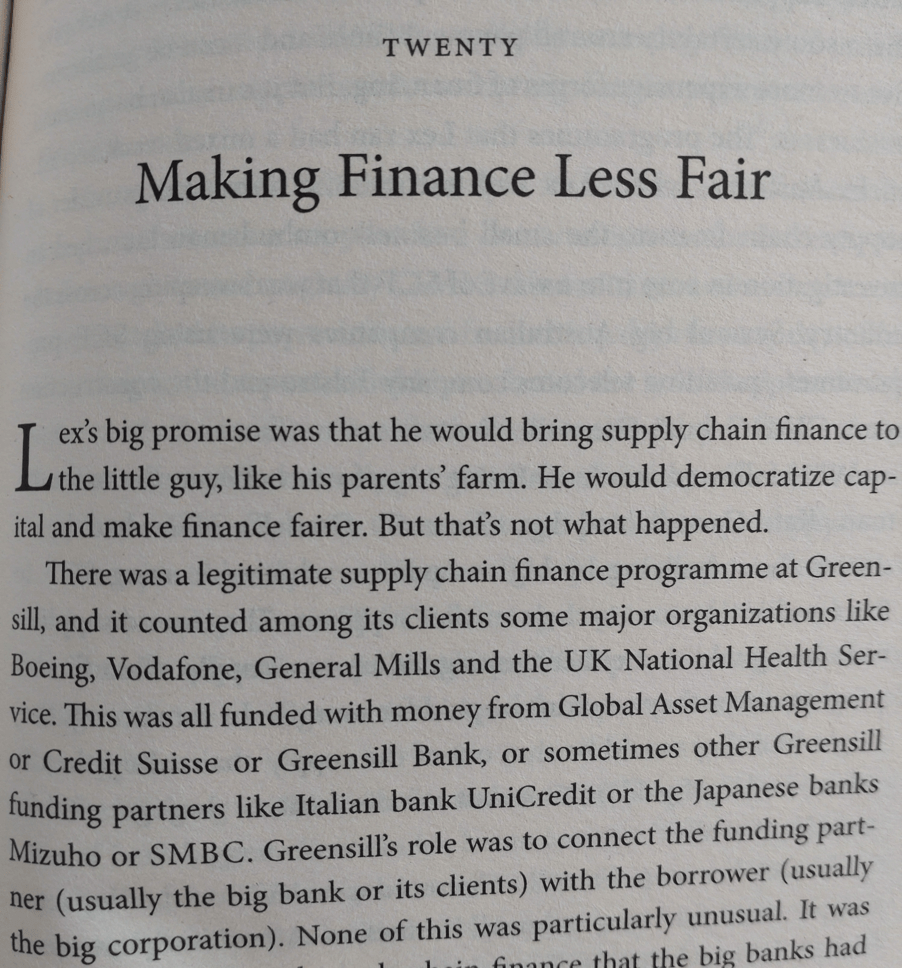
Lex Greensill’s promise with his eponymous supply chain finance business was to redress the balance between suppliers and their customers – customers which are often much larger and set terms that are markedly favourable to themselves. As set out in chapter 20 of the excellent and highly recommended book Pyramid of Lies on Greensill and how his business collapsed into scandal under the weight of undelivered promises, that’s not how it turned out.

Instead, author Duncan Mavin argues, Greensill made finance less fair.

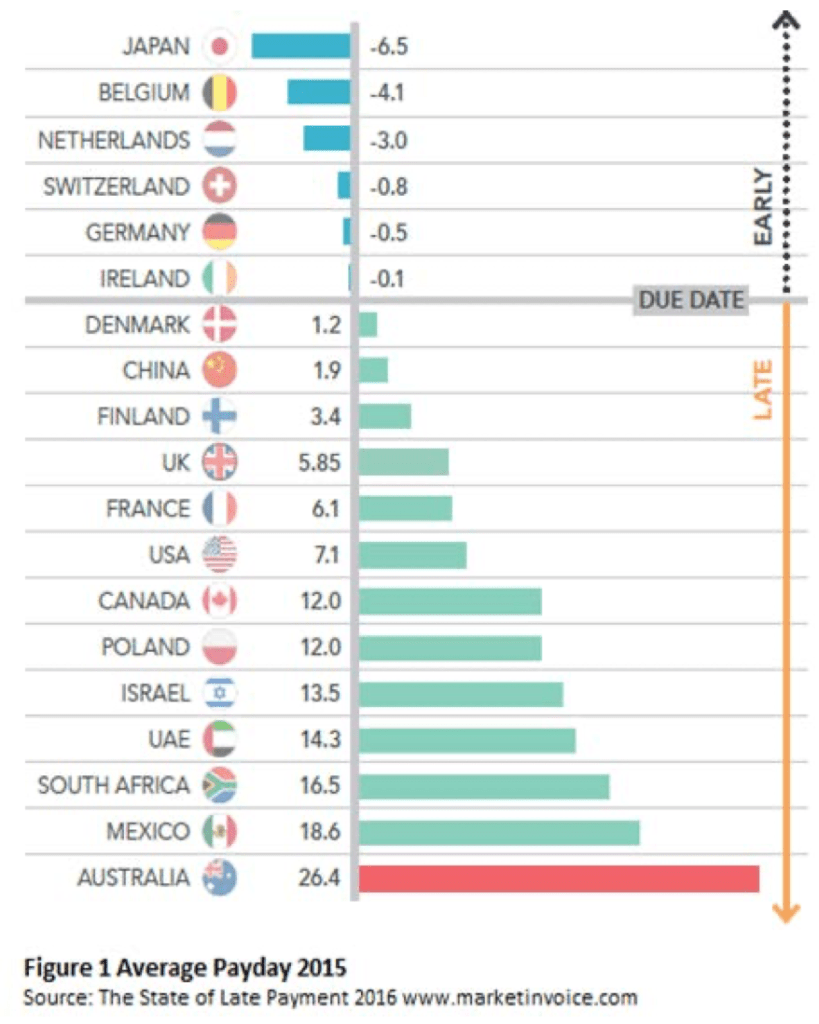
In the chapter, Mavin’s main evidence for arguing the unfairness of supply chain finance is the excellent work by the Australian Small Business and Family Enterprise Ombudsman (painfully abbreviated as ASBFEO). Its 2017 Payment Times and Practices Inquiry Final Report noted the country’s poor treatment of small suppliers – as the chart below suggests, Australia was a particular outlier but far from alone in seeing larger businesses taking advantage of their supply chains. Most of ASBFEO’s recommendations in that final report were addressed to the Australian government – urging among other things that the government offer 15-day payment terms as standard, and require its own head contractors to offer the same terms also (which seems sound, and fair, advice to other governments). Its recommendations to industry more generally led to the creation of the voluntary Australian Supplier Payment Code. This was launched in 2017 and has been reviewed since, the latest version dating to 2021.

The core requirement of the voluntary Code is that Australian suppliers should be paid within 30 days. But the ASBFEO in its March 2020 Supply Chain Finance Review Final Report highlights that supply chain finance schemes, including those provided by Greensill, enabled this basic standard to be evaded and suppliers in effect to be obliged to accept different terms even while signatories could claim adherence to the Code. The Ombudsman called for greater transparency, in particular for any requirement to use supply chain finance, and for greater regulatory attention on supply chain finance, both its potential to exploit data on suppliers and the possible regulation of the form of finance overall.

The report specifically references promises that Greensill made as a response to the ASBFEO’s work on supply chain finance. It states: “Greensill Capital have announced that they will not allow their product to be used by large businesses that push out payment terms to SME suppliers beyond 30 days,” as well as quoting Lex Greensill himself referring to this sort of activity by large companies to be “bullying” of their smaller suppliers.

Bullying of the supply chain is clearly not admirable or fair behaviour. It isn’t likely to be sustainable in the long-term as suppliers are likely to seek customers that offer less on-sided relationships – or may risk themselves not being sustainable in the long-run. But sadly it appears to be prevalent, not only in Australia.

In addition, among the evidence to the ASBFEO in its review is further confirmation of what I have previously called the economic madness of the whole supply chain finance offering. Local provider TIM Finance in its letter in response to the review, states:

“[Supply chain finance], when implemented and used properly, provides huge benefits to Suppliers as they are sourcing funding (by being paid early) by taking advantage of the cost of funds based on the Buyers [sic] credit rating. The annualised discounts that a Supplier ‘endures’ by accepting early payment needs to be equal to or less than the cost of funds of that Suppliers [sic] sourcing a funding facility (business loan) themselves from a bank or non-bank lender.”

This confirms the simple point that supply chain finance relies on the lower pricing of finance on offer to the large company that is the customer – the ‘cost of funds based on the buyers’ credit rating’ – in comparison to that available to the supplier. The supply chain finance provider takes its profit margin out of that differential. As well as being fairer, the cheaper route for the system overall would be for the financing of the supply chain to come predominantly from the customer, taking advantage of its lower cost of finance, without a further intermediary taking a margin from it. If customers didn’t stretch the payment terms required of their suppliers, then there would be less cost in the system overall.

The removal of Greensill Capital from the market – and the disgrace in which it has exited – may have brought this sort of offering into some further disrepute, which the Australian Small Business and Family Enterprise Ombudsman would suggest is wholly deserved. The new accounting standard requiring further disclosures may also reduce some of the perceived advantages for this sort of financing. The evidence is that this would be less economically wasteful, as well as representing fairer finance.

See also: Demanding Supply

Pyramid of Lies, Duncan Mavin, Macmillan, 2022
Note for UK readers: the subtitle (presumably only for the UK market), ‘The Prime Minister, the Banker and the Billion-Pound Scandal’ isn’t really delivered on; David Cameron remains largely a peripheral figure throughout. The book is none the worse for that.

Payment Times and Practices Inquiry – Final Report, Australian Small Business and Family Enterprise Ombudsman, 2017

Australian Supplier Payment Code, Business Council of Australia, 2021

Review of the Australian Supplier Payment Code, Business Council of Australia, 2019

Supply Chain Finance Review – Final Report, Australian Small Business and Family Enterprise Ombudsman, March 2020

Feedback on the Supply Chain Finance Review – Position Paper, TIM Finance, February 2020

Supplier Finance Arrangements, International Accounting Standards Board

Fairness barriers to global climate deals

The Amazon is a remarkable space, both for its beauty and biodiversity and for the global service it performs as the lungs of the world. If it were not subject to mass deforestation it would be a substantial carbon sink in a world desperately in need of places to swallow our rising levels of carbon dioxide.

We’ve seen two pieces of news about the Amazon in recent weeks, neither of them told with complete accuracy. First was the news about a decrease in deforestation in Brazil, which was celebrated by many. Of course, it is a positive sign that the new political regime under President Luiz Inacio Lula da Silva can reduce the most negative impacts of his predecessor’s free rein populism, but deforestation continues; it is just that its speed has reduced. We are some way away from the true reversal of the damage done to the Amazon under President Bolsonaro. Fears persist that the Amazon may be reaching a point of no return and this news leaves the rainforest heading in the wrong direction.

The second piece of news was the Belem Declaration, an agreement between the 8 countries that contain the Amazon region within their territories, signed on August 9th. We were told that this was a failure because it did not contain what President Lula apparently hoped for: an international deal to end Amazon deforestation by 2030. The Declaration is nonetheless a notable achievement (any agreement between 8 different countries with very different politics is notable), containing no fewer than 113 objectives and principles. It is also a document that teaches us a great deal about where we are in terms of the geopolitics of climate.

A lack of fairness is central to what hinders us in reaching international deals to constrain future carbon emissions and boost the health of carbon sinks. The Belem Declaration makes clear that any global climate deal needs to think deeply about how to embed fairness. We’re heading towards COP-28 in Dubai. I don’t personally have great hopes that a good deal will be struck there, because the world’s leaders don’t yet seem to have learned this lesson about fairness. I do hope to be proved wrong.

Fairness is explicitly central to the Belem Declaration. The document starts:

“Aware of the urgency of the challenge of the full protection of the Amazon, the fight against poverty and inequalities in the Amazon and the promotion of sustainable, harmonious, integral and inclusive development in the region”*

The language of fairness recurs throughout the preamble, including for example in a section about the importance of women’s rights and perspectives: “Recognising that women and girls are disproportionately affected by the adverse impacts of climate change and environmental degradation, and that their participation in decision-making is critical to sustainable development, the promotion of peaceful, fair and inclusive societies and the eradication of poverty, in all its forms and dimensions.”

President Lula’s reported 2030 ambition for ending deforestation is in fact visible in the Declaration, stated as an ‘ideal’ of zero deforestation by that date. The Declaration also mentions the aim of eradicating and stopping the advance of illegal logging. However, it isn’t hard to read between the lines to see why that simple ambition wasn’t formally agreed at the summit: throughout the document it talks about the need to balance the interests of local populations, particularly indigenous people, and the need for sustainable economic development for the people of these developing economies. The Declaration seems to talk less about the need to protect the rainforest for the benefit of indigenous peoples, and more about how those indigenous peoples can fairly enjoy some economic development, acknowledging that this needs be sustainable development. The fact that 2030 is also the timeline for delivering the UN Sustainable Development Goals seems implicit in the thinking about Lula’s deforestation ambition.

The call for fairness in sharing of resources, and the scope for less developed economies to enjoy development notwithstanding the climate challenge, is especially clear in the Climate Change section of the Declaration. This includes a number of very specific asks of wealthy nations, including paragraph 35 which urges developed economies to bring forward their financing, especially the promised $100 billion a year for developing economies to support their delivery of climate actions. Similarly, paragraph 36 calls for innovative financing for climate actions, including potentially the exchange of debts in return for climate actions.

For many of us, it remains a frustration that politicians continue to emphasise the costs of the climate transition without any apparent attention to its economic opportunities (let alone the costs of inaction), but that is clearly where the political thinking remains for the time-being. And in large part, the reason for this is the unfairness of how climate impacts are shared, particularly when compared to historic and current emissions, and indeed capacity to pay, as this chart from this year’s Climate Inequality Report starkly shows:

A clearer visualisation of why the political process on climate is stuck would be hard to find.

The polluters need to pay, but at present they feel limited incentive to do so. Of course, as well as the inter-country unfairnesses in carbon emissions, there is remarkable unfairness in emissions within country too (see Unfairness in carbon emissions) – and as of the last two decades this is now the greatest driver of carbon inequality, according to the Climate Inequality Report’s chart below:

But it is the still very substantial unfairness between countries that makes political progress so difficult.

It cannot be by chance that the Belem Declaration contains a statement of support for Brazil’s bid to host the COP-30 climate summit in 2025 – accompanied by a note that the progress from this year’s COP-28 to COP-30 “will be critical to the future of the global response to climate change” [isn’t every one of the next months and years?]. The bid is to host the COP in Belem itself; one hopes that the symbolism of holding the event in the Amazon has an appropriate effect.

This is the South’s agenda: you cannot ask us to act alone. We need help and assistance. Until the North responds, not just with words but with real cash, systematically and at scale, the politics will remain blocked. Whether the requirement will be at the scale of the annual $300 billion global wealth tax floated in the Climate Inequality Report will have to be seen.

But it is clear that unless we address inequalities we will not reach the political agreements needed for a global approach to the climate challenge. We need fairness to find a global solution that takes the world forward. Without fairness – or at least without less unfairness – we will not progress.

* Note that, here and elsewhere in this blog, this is an informal translation; the declaration is only officially published in Portuguese and Spanish.

See also: Unfairness in carbon emissions

Just transitions and gilets jaunes

Sea level rise: the most unjust transition

Press notice on the Belem Declaration, Amazon Cooperation Treaty Organization, 9 August 2023

Belem Declaration, August 2023

Climate Inequality Report 2023: Fair taxes for a sustainable future in the Global South, Lucas Chancel, Philipp Bothe, Tancrède Voituriez, World Inequality Lab, January 2023

Just Nature: How finance can support a just transition at the interface of action on climate and biodiversity, Sabrina Muller, Nick Robins, Grantham Research Institute on Climate Change and the Environment and Centre for Climate Change Economics and Policy, August 2022

The scandalous Post Office

I am furious afresh about the unfairness of the Horizon Post Office scandal. Two things have reawakened my fury: a powerful new play on the scandal, and the Tax Policy Associates analysis of the appalling ‘compensation’ scheme. The quote marks are meant to indicate that the scheme is not worthy of the term compensation. 

I’ve written about the substance of the scandal before, in Unfair trials: justice in the dock. In brief, the UK Post Office launched a new IT system, Horizon, created by Fujitsu, which was not fit for purpose and riddled with bugs. Once problems occurred, the organisations preferred to take Post Office workers to court for theft and fraud rather than admit there was any possibility of failings by Horizon. Once it became undeniable that there were such problems, they preferred to lie and continue to put people in prison and ruin lives in other ways, than do the fair thing and reverse out of the situation. The Tax Policy Associates work indicates that they still don’t want to be driven by fairness and do the right things by the victims, but instead continue to act first to protect the Post Office itself.

But to start with the play, False Accounts from the Outcasts Creative was both a satirically funny and powerfully emotional event. I personally found the humour a little uneven but it was probably a necessary leavening to the intensity of the emotion generated by a strong and impassioned cast.

The performance I enjoyed was made all the more powerful by having individuals in the audience directly affected by the scandal. The scale of their personal anger was clear – on occasions they were unable to stay silent. And their tears at the suicide scene were much more copious than mine, affecting as it was.

There’s a moment in the script where the cast invites the audience to think how ordinary the victims of the scandal were, that they might be the people sitting alongside us. For me that moment was among the most powerful as it was literally true. I’m pleased that I managed to encourage my neighbour to join the cast on stage after the show for due applause and recognition.

False Accounts has a further short run at the Upstairs at the Gatehouse Theatre in North London from June 20th and is highly recommended. It provides a great first insight into the scandal as well as bringing to life its emotional realities for those who already know the story. I can’t guarantee that you too will be joined by those directly affected but it’s certainly true that it’s possible your neighbour in the theatre may also have been a victim.

Meanwhile, in his latest Tax Policy Associates work, Dan Neidle outlines Eight reasons what the Post Office compensation scheme is a scandal. I’ve previously referenced Neidle’s consistently excellent work in the tax space (see Tax shouldn’t be a choice). This latest is slightly tangential to his core skillset but maintains his usual quality of analysis.

His conclusion is blunt and focused on fairness, both of process and outcome:

“the Post Office has adopted a strategy to minimise compensation… It does that by minimising the initial claim postmasters are making. The Post Office can then point to all the procedures in place to ensure claims are handled fairly – but the unfairness happened right at the start.”

In his typically detailed and forensic way, Neidle sets out how the so-called Historic Shortfall Scheme – ironically – falls short of fairness. Essentially, this is through an over-complex application process that diverts attention from some forms of compensation that victims are due, and on which legal advice is discouraged. In effect, the Post Office seems to be exploiting the lack of skill and knowledge of its victims and Neidle is reporting the authors of this process to the Solicitors Regulation Authority. As in the original scandal, the Post Office lawyers appear to be riding roughshod over the rule of law – fairness, in other words – in what amounts to a further scandal. 

It represents something further to be put right, and something that infuriates in the meantime.

See also: Unfair trials: justice in the dock

Tax shouldn’t be a choice

False Accounts by Lance S A Nielsen

To be performed at: Upstairs at the Gatehouse, June 20th-25th

Eight reasons why the Post Office compensation scheme is a scandal, Dan Neidle, Tax Policy Associates

Solicitors Regulation Authority

Impunity – an atlas of unfairness

All actions have consequences. It’s a law of physics – Newton’s third of motion – and it also ought to be a rule in human societies. Generally it is, but as unfairness wields its influence, the rich and powerful are able to avoid many of the consequences of their activities.

That’s the basis for a new atlas of impunity, produced by the Chicago Council on Global Affairs and the political risk consultant Eurasia Group. As they put it:

“Impunity is the exercise of power without accountability, which becomes, in its starkest form, the commission of crimes without punishment.”

The report goes on to suggest that: “Impunity thrives when the imbalance of power is so great that the powerful think they do not have to follow the rules.” In other words, impunity is a clear form of unfairness. And unfortunately, “This feeling is one we think is prevalent, and which we fear is on the rise.”

There are detailed conclusions but the headlines are summarised in this global map:

The published data covers 197 countries in total, of which the authors believe they have enough data coverage to rank 163. The overall analysis represents a new tool for businesses and investors in thinking about the world and the stability and reliability of its regimes. The analysis of how such tools might be deployed by both investors and companies in my recent paper for the Bingham Centre for the Rule of Law applies.

Indeed, there’s significant alignment between the insights from the Atlas and existing global assessments of the Rule of Law. Overall, there are 8 indicators specifically from a Rule of Law analysis (the World Justice Project’s Rule of Law Index) and many others will be recognisable as measures used in such analyses. As with other measures of the Rule of Law, weaker performance reflects a poorer environment for business activity and so a brake on overall economic performance.

The 8 explicitly Rule of Law indicators are out of 67 in total, and are spread across 3 of the 5 components of the overall index. These components are:

  • Unaccountable governance
  • Abuse of human rights
  • Economic exploitation
  • Conflict and violence
  • Environmental degradation

It is here that the Atlas of Impunity differs from previous measures of Rule of Law and similar assessments: within the environmental and conflict components, the Atlas includes elements considering a country’s impact on the wider world. Both components are predominantly about issues within countries, such as air quality and waste management, and community safety and homicides respectively. But they also include indicators including (again respectively) the overall ecological footprint and involvement in the arms trade. As the report states, “the impunity framework helps us understand the connection between what happens at home and what happens abroad. It speaks to interdependence in a way that national frameworks cannot.”

This seems fair and an important advance on what came before. It brings in a sense of a nation state’s impunity for the damage that it causes the rest of the world, a sense of the fairness of its influence on the wider world. However, it is notable that the correlation between these two elements and the overall score is much lower (0.80 for conflict and violence and 0.69 for environmental degradation) than the remarkable levels of correlation between the other three elements and the overall score (between 0.93 and 0.96). So though Norway has low scores on the environment because of its export of fossil fuels and its rich-world environmental footprint, pulling its scoring notably below its neighbours Finland, Denmark and Sweden, it still ranks fourth overall behind these three. Canada’s position is also notably weakened for reasons similar to Norway, but still ranks highly.

The list of the weakest-performing countries is perhaps even less surprising: Afghanistan, Syria, Yemen, Myanmar and the Central African Republic, all of them scarred in different ways by their recent pasts. The authors are keen to point out that while results are framed by the past, history isn’t destiny. They note Senegal and Ghana as among those outperforming their difficult heritages.

As with other such indices and rankings, there is much that both companies and investors (in their sovereign debt investment and stewardship approaches, but also in corporate stewardship activities) can do to reflect on the lessons from them, and work to reinforce better and more robust societies in the countries in which they invest. That will bolster economic prosperity and so business and investment performance, as well as helping to build a fairer world.

See also: Investor actions to drive value and fairness through the Rule of Law

Board actions to protect value and boost fairness through Rule of Law

Atlas of Impunity 2023, Chicago Council on Global Affairs and Eurasia Group, February 2023

The Rule of Law and investor approaches to ESG: Discussion paper, Bingham Centre for the Rule of Law, September 2022

World Justice Project’s Rule of Law Index

Impartial – or fair?

Our modern society convulses on occasions about issues that burst into flame from seemingly remarkably small sparks. It’s somehow a feature of the social media age, and perhaps of the nature of politics that social media seems to encourage.

In the last weeks in the UK, one convulsion has been in relation to a brief tweet by a former footballer criticising the language surrounding one aspect of government policy. It’s more complicated than that, of course: the former footballer is Gary Lineker, who leads football coverage at national broadcaster the BBC (and is its highest paid star), and the policy is one of the new Prime Minister’s 5 key promises to the nation, to stop the arrival of a few thousand individuals by boats across the Channel from France.

Lineker, who famously never received a yellow or red card as a player, was sent from the pitch by the BBC, only subsequently to be reinstated after a wider rebellion by pundits and commentators neutered its sports coverage. At its heart the BBC’s convulsion was in relation to its commitment to ‘impartiality’ and the extent to which that commitment should limit comments by contractors such as Lineker, particularly those operating in non-news areas of its coverage. No one disputes that employed news staff must avoid sounding personally political.

I don’t intend myself to discuss government policy nor the words Lineker chose to use, nor other aspects of alleged politicisation at the BBC. A lot has already been said about the fairness or otherwise of Lineker’s treatment and the treatment of other BBC contractors. Rather than turning that over again, I want to explore what the BBC and others think is meant by impartiality and whether it’s the right concept to apply at all. I am grateful in this to the inspiration of a short post by legal blogger David Allen Green, which considered the concept of impartiality as it is applied in the courts.

A key section of Green’s commentary is the following:

“the judge is required…to decide the dispute impartially and having given each side a fair hearing./What the judge will not do – even though they are duty-bound to be impartial – is to treat both sides as having equal weight and not make any material decisions at all.”

He rails at what he and others sometimes call the ‘both-side-ism’ that the BBC can appear prey to: the tendency occasionally simplified as reporting two points of view, one that it is currently raining and the other that it is not, rather than looking out of the window to verify the situation one way or the other. Of course, most issues are more nuanced than the presence of precipitation (even in the context of the UK’s propensity to wide varieties of rainfall). In a more substantive area, many complain that the BBC used to have both climate scientists and climate change deniers weigh in on the issue, as if the balance of opinion was somewhere halfway between these, when the unanimity of scientists about the climate crisis is almost total. Happily the broadcaster seems to have gained greater confidence in the certainty of the science of late.

The oddest thing when exploring impartiality at the BBC is that though this is the term that has been used as a one-word drumbeat throughout the recent debates – the Director General’s comments were littered with that single word – it is not what the BBC is committed to, nor what the regulator, Ofcom, insists on. The broadcaster is called on not to apply ‘impartiality’ but ‘due impartiality’. This is the term used in Ofcom’s Broadcasting Code. It’s also the relevant term in the BBC’s foundational document, its Royal Charter, and in the Framework Agreements between the organisation and the government that sit beneath the Royal Charter. The BBC is not expected to be impartial; it is required to be duly impartial. What’s more, that requirement applies largely only to its news reporting: the word ‘impartial’ appears only to be applied within the foundational Royal Charter with regard to the BBC’s “news, current affairs and factual programming”.

It’s been reinforced more recently in the latest of the so-called Framework Agreements that are the vehicle for the government to assert its expectations of the BBC. The 2022 Framework Agreement inserts clear obligations for the BBC board, under the unequivocal banner “The board must:”. Bullet (b) says that the board must “ensure in particular that any such guidelines set appropriate standards to secure the fairness, due impartiality, due accuracy and editorial integrity of the content of the UK Public Services”.

In its Broadcasting Code, Ofcom clearly explains the importance of the word ‘due’:

““Due” is an important qualification to the concept of impartiality. Impartiality itself means not favouring one side over another. “Due” means adequate or appropriate to the subject and nature of the programme. So “due impartiality” does not mean an equal division of time has to be given to every view, or that every argument and every facet of every argument has to be represented.”

So the BBC is explicitly not required to be impartial, and should not be seeking to apply that standard, it must be duly impartial. As Ofcom explains, that means it must apply appropriate judgement and be impartial with a wise sense of the context and of reality. In short, it must be fair – it’s notable that many dictionaries offer fairness as an alternate term for impartiality. But surely fairness is an even better synonym for due impartiality: both terms require sense and judgement, and would expressly lean against lazy both-side-ism.

The banner for Section 4 of the BBC’s editorial guidelines

It’s sad then that the BBC’s own Editorial Guidelines are casual in how they consider the term impartial. Section 4 of the Guidelines is entitled Impartiality, not Due Impartiality. Further, while the introduction of the section does talk about due impartiality, the explanation seems less precise than Ofcom’s and in fact seems to invite the introduction of all points of view, just not necessarily in a single programme but instead potentially over a whole range of programming. It feels like an invitation to both-side-ism rather than a clear expectation that journalistic judgement must be applied and fairness should prevail. Later in the section, both ‘impartiality’ and ‘due impartiality’ are used, without any apparent consciousness that they are different things and that the BBC is not required to be ‘impartial’ without the context and sense that comes with the ‘due’.

Perhaps unusually for this blog I’m not seeking to argue that the term fairness should be substituted for due impartiality – that term seems well-embedded and well-understood at least by the BBC’s regulator if not so clearly by the broadcaster itself. But I do think that the judgement and sense that is freighted in the term fairness needs to be learned from. Due impartiality is not impartiality – it is a much better and more demanding standard. It is not fair to its great heritage that the BBC is lazily drifting from living up to the standard of due impartiality and apparently trying to substitute the weaker term of impartiality.

See also: Fairness on the airwaves

The BBC and impartiality, The law and lore blog, 13 March 2023, David Allen Green

Broadcasting Code, Section 5: Due impartiality and due accuracy, Ofcom (dated 5 January 2021)

Broadcasting Code, Section 5: Due impartiality and due accuracy, Guidance notes, Ofcom (dated 22 March 2017)

BBC Royal Charter 2016

Framework Agreement between Secretary of State and the BBC, 2022

Editorial Guidelines, Section 4: Impartiality, BBC