Nonetheless it is fascinating to read John Burn-Murdoch’s piece for the Financial Times this weekend, Inequality hasn’t risen. Here’s why it feels like it has, which is grounded wholly in the Gini coefficient. Burn-Murdoch is the FT’s Mr Statistics, and he is always readable and interesting, so I’ll forgive the obsession with the use of single datapoints that will always be flawed if viewed in isolation (and I’ll acknowledge also that he recognises the limits of Gini: “Aggregate inequality statistics certainly have their place, but they can mask important nuances,” he writes).
The core of Burn-Murdoch’s article is the data shown in these charts:
He notes the increased attention to inequality over the past decade, even though the Gini numbers suggest it is in fact falling in both the UK and US, and he attributes this to a squeezing of the middle class between improved treatment of the poorest paid (which appears to be the driver of more than the total drop in the Gini measurement) and an increased stretching of the advantages of those best off in our society (which has increased inequality, but less than the reduction driven by the improvements for those least well off). While it’s known that the minimum wage in the UK and its bolstering over time has helped those least well off here, it is more surprising to find that some similar improvements have also been experienced by the poorest in the US also, despite the notorious stagnation of the national minimum wage there. This squeezing effect is reflected in the title given to the article in the paper copy of the newspaper: Why the middle class is right to feel squeezed.
This blog would naturally suggest that one reason why there is increased noise about inequality now, despite the falls in the Gini coefficient, is that the problem as humans see it is unfairness, not inequality, and the bluntness of Gini fails to capture the richness of human experience. In particular, it’s hard to believe that the improvement in the incomes of the poorest is genuinely felt to be an improvement in their life experience – perhaps especially as they have experienced greater inflation than wider society over recent times. The moves in Gini may be masking insight as much as they are revealing.
Burn-Murdoch is clearly right when he highlights the reductions in sense of opportunity available to many in society – opportunity both for themselves and for their children. But, for this blog at least, these are questions of fairness, not of inequality (measured by Gini or in some other way).
A historical meander through the countryside for the holidays
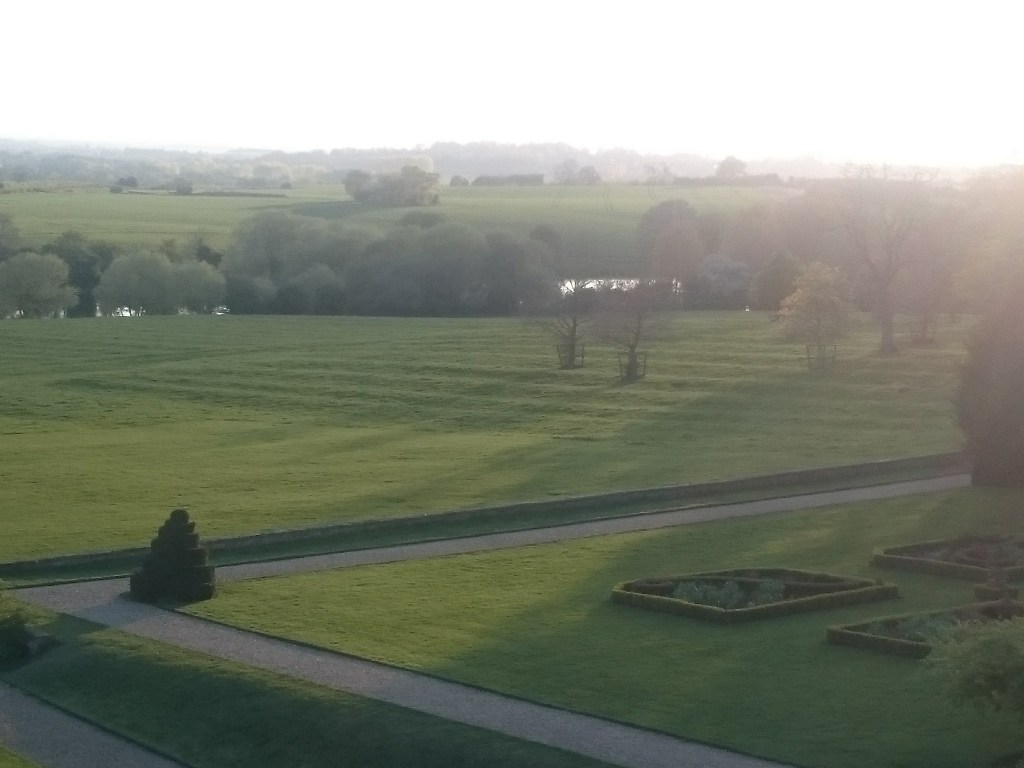
The quintessential vision of England is of a village set in rolling countryside. Depending on the topography, this may be hills cropped by sheep, or less frequently other farm animals, or flatter lands growing cereal. But whatever the countryside, the village is consistently there (whether or not, like former prime minister John Major, we include in our image cricket and warm beer and spinsters cycling across the village green). We imagine these villages as images of fairness and justice, representing the ordinary people of England, strong, independent and free.
But those villages have not always been there. And they do not always represent fairness, independence or freedom (even if we can set aside modern concerns about incomers pricing out locals). Any settlement and community is the creation of a set of decisions. Some of those decisions were by ordinary folk choosing to come together for their own reasons. But many times what are now viewed as symbols of peace and tranquillity were created by force at the whim of the local landlord, a feudal founding created to control the population and ensure that it was productive – to the benefit of the seigneur.
The bucolic beauty that we tend to take for granted was often an emblem of power and an assertion of unfairness. The same villages have also over centuries witnessed further episodes of the ebb and flow of power, and of fairness. We tend to imagine these places unchanged forever. They are not.
It used to be thought that there was a ‘village moment’ in England, when villages suddenly appeared in the landscape. My use of the term ‘seigneur’ was deliberate, for this ‘moment’ was for decades ascribed to the Norman invasion of 1066 and the following years, when newly created feudal lords established villages as power bases to control the population and its work effort. It is not just that the Domesday Book (which dates to 1086) provides us with the first consistent written record of the existence of English villages (though often it refers to individual farmsteads or small hamlets that later developed, or were developed, into villages).
This belief in a particular moment of village creation was reinforced by the archaeological digs of abandoned (or shrunken) mediaeval settlements, which “showed very little evidence for occupation earlier than the eleventh or twelfth century” as Carenza Lewis and colleagues explain in their key work Village, Hamlet and Field. But the belief eroded as further investigations, not least of settlements that continue to exist, tended to extend the moment to a rather broader period: they “seemed to push forward the origin of the large nucleated village to the period between about 850 and 1200”. It’s tempting to suggest that the disproportionate representation of the Norman-created villages among those that were subsequently abandoned is a sign that their artificial creation meant they were less sustainable than those created organically by a population choosing to move closer together, but I suspect that’s a little pat.
While landscape historians have pushed back the creation of many villages, it is undoubtedly true that many others were created soon after the Norman invasion, by those new feudal landlords: “lordly authority was clearly a key motor in the planning of settlements,” explains Oliver Creighton in his Designs Upon the Land. He further says: “The well attested phenomenon of seigneurial village planning, which in many cases extended to embrace field systems, can be taken as further evidence for the expression of lordly authority.”
These Saxon and mediaeval creations were of course not the first villages, though they were the first of a scale that we would recognise, and the first to include a village church (typically seen as the signifier of the distinction between village and hamlet). There were Neolithic villages – examples of these can still be seen at Scara Brae in Orkney, Carn Euny in Cornwall and Ty Mawr on Anglesey (preservation is better in remote places). But life generally remained scattered until towards the end of the Anglo-Saxon period.
These were not the first villages, but these were the first that we might recognise today. And, whatever the timing of their creation, all were under tight command and control arrangement, “a tightly managed landscape” says Trevor Rowley in the classic Villages in the Landscape. “The manorial court was responsible for the regulation of internal field boundaries, the precise amount of grazing and rights of gathering on the common waste, and it also had responsibility for the trackways and streams. The manor courts collectively administered rules of husbandry, watched over local customs of tenure and inheritance and enforced local peace and order. By 1300 we would have looked on a landscape which was intensively used at a subsistence level.” This was not a fair landscape: most lived the hardest of subsistence existences while a small handful prospered.
As Rowley summarises: “the permanent nucleated village so familiar to us today was a factor not of ethnic or cultural change, but of economic and social forces. It was brought about by a complex combination of increasing population and increasing authoritarian control through the manorial system”.
And it wasn’t only the villages, but the landscape more broadly. Creighton takes a particular interest in parkland, land taken into private ownership as a venue for hunting. He points out that taking land out of agricultural production and creating parks was not an economic decision, but a social one driven by concerns of status. “The right to empark was a jealously guarded privilege and badge of lordly authority,” he writes. “The huge outlay involved in the creation of parks and the challenges of maintaining them, combined with the minimal financial returns that accrued, shows that they were not geared to maximise profit by cold, hard businesslike patrons.”
Ridge and furrow – a relic of mediaeval communal shared fields – within the private walled grounds of the National Trust’s Canons Ashby, Northamptonshire. An example of the historic privatisation of shared land
This contrasts of course with the much later enclosure movement when the wealthy took land out of common usage by the general population and asserted their direct ownership of it (often with the formal endorsement of acts of parliament – the law being used to enforce the demands of the powerful). Enclosure coincided with the agricultural revolution, making the productivity of the seized lands more than recompense the cost of the creation of the hedges, walls and fencing – and of the policing of the protests from the dispossessed population. Susanna Wade Martins in Farmers, Landlords and Landscapes reports that after enclosure, “Productivity could sometimes be doubled and rents went up by an equivalent amount.” That wasn’t the case with mediaeval seizures.
Parks in the mediaeval era were just as contested as the enclosed lands, though. As Creighton points out, “Many parks were recorded for the first time not when they were licenced or created, but when they were first broken into.” He suggests that poaching may have been just an assertion of continuing rights to seek food in emparked land.
Alongside this privatisation of land, from 1250, the elite turned more aloof, power and wealth enabling them to distance themselves from ordinary folk. Increasingly, the wealthy kept themselves apart, both in the siting of their own property and in the design of their buildings also. Creighton says: “an increasingly aloof aristocracy … was progressively increasing the social distance between the household and the world beyond the walls… This is part of a pan-European phenomenon evident at key lordship sites in France, Germany and Scandinavia and, in turn, part and parcel of a broader phenomenon of the increased privatisation of space, as manifested particularly clearly in the changing function of the hall and modes of domestic planning that enabled individuals to spend more time in individual rooms.” This period seems to coincide with a trend towards moated sites for elite dwellings – typically a symbolic separation rather than offering any degree of protection. This trend towards status symbols and separation was reflected in food also, for example it is at this period when the eating of more exotic birds becomes an activity for the elite, and the poor were excluded from certain foods.
This move is not to be taken lightly. In his The Archaeology of Power, John Steane discusses the ceremonial role of the lordship’s property, in particular the community role fulfilled by his hall, “the architectural expression of the household”. He quotes from William Langland, the 14th century supposed author of Piers Plowman, who criticises those lords whose halls have become a “sorry, deserted place” because “the rich nowadays have a habit of eating by themselves in private parlors”. The implications of the harm caused to community and society as a whole by this withdrawal are significant.
This was an age of remarkable unfairness. The majority toiled, a few did well – and increasingly turned their backs on the toilers, living very separate lives. It took a devastating event, or series of events, to reawaken fairness in our country. Those events were the repeated scourges of the Black Death (which first swept across Europe in the years either side of 1350), devastating the population and bringing enormous changes in its diseased wake.
I wrote in my last post about the impact of the Second World War in sweeping away some of our nation’s then ossified unfairness and injustice. And I noted that we must hope that it doesn’t take such an event to sweep aside the unfairness that has built up again in our society. The Black Death was a still more lethal and traumatic event that led to an even more remarkable reversal of inequalities. According to James Belich’s analysis in his remarkable and epic history of the consequences of the plague era, The World the Plague Made, around half of Europe’s population died from the initial outbreak of the plague (he spends a whole chapter justifying this conclusion, which is greater than the usually quoted one-third, a death toll that would have been remarkable enough).
As Belich explains, this halving of the population dramatically increased the value put on labour – meaning that the poorest suddenly began to be paid more. The poorest may have doubled their available spending capacity (even the smallest increment in pay for someone operating at subsistence levels will enable this), as well as giving them more leisure time; others fared better in absolute terms. The decrease in the availability of labour, and the increase in its cost, led to a productivity revolution – and with the same capital goods now shared between a halved population there was significant scope for such a productivity shift. This, together with increases in money available across the economy, led to a boom in demand for what had previously been luxuries available only to the few. Trade boomed, deploying the same shipping capacity for the benefit of the halved population. Many were freed from subsistence farming and agricultural patterns shifted to favour more specialisation.
Belich argues that it was the plague that led to Europe’s imperial dominance of the globe over subsequent centuries. One vehicle for this, he suggests, is that the fairness of the post-plague era lingered long enough in folk memories that it made ordinary people willing to risk everything to travel to far off lands in search of a better life, a life more like the less unequal era post-plague.
Those with Scottish and Irish heritage will no doubt baulk at this, pointing to the enforced movements caused by those great historic injustices the Clearances and the Great Hunger (the capital letters just a nod to their cultural significance) – and others will point to other causes in other lands. There’s truth that many travelled the world (and do so now as well as then) because their homeland no longer offered them a home, but both events came later than Belich intends. He is thinking about the start of the European imperial era, in the fifteenth and sixteenth centuries, when the journey itself was extremely hazardous, with around 30% dying even before they reached their destination – let alone the challenges of the precarious imperial outposts that were created. Those of course are the odds of those who travelled freely as free people, not of those who were enslaved, nor those of the indigenous peoples whose lands were taken from them.
European people travelled in spite of these odds, Belich believes, because they remembered the freedom and fairness that followed the horrors of the Black Death. A small hope for fairness will inspire many to action.
As we walk the countryside, we should recognise how it offers insights into past unfairness, and not the simple bucolic beauty that is all we sometimes see.
I am happy to confirm as ever that the Sense of Fairness blog is a purely personal endeavour.
Village, Hamlet and Field: Changing Mediaeval Settlements in Central England, Carenza Lewis, Patrick Mitchell-Fox, Christopher Dyer, Windgather Press, 2001
Designs Upon the Land: Elite Landscapes of the Middle Ages, Oliver Creighton, Boydell Press, 2009
Villages in the Landscape, Trevor Rowley, Dent, 1978
Business as usual is where – for the time-being at least – the money is, and in our world that means it is where the power is. That power gives business-as-usual a gravitational force even when good sense and science call out for change, and even when in the long-term it’s a losing game financially. Power leads us astray, and fairness requires that we find some counterbalance to this force. Only then will change come.
We see this gravitational force of business-as-usual most powerfully in the world’s climate negotiations. The vast majority of the world’s scientists tell us that we have no time to lose and that economies and business must change. The Pacific island nations and developing economies more generally (without the money that might pad them from the increasing physical impacts of climate change) are increasingly urging change. Unusual and devastating weather patterns are being felt worldwide. We cannot continue to pump the same levels of CO2 and other climate-changing gases into our atmosphere.
A carbon-constrained future will look economically very different, and the companies that prosper in its business-as-usual will differ from those that look good now. Yet the status quo predominates in the political process. Most strikingly, governments of the world have been content to allow petrostates to co-opt the climate COP process. The last two Conferences of the Parties Serving as the Meeting of Parties to the Kyoto Protocol (no wonder the COP abbreviation is preferred) have been held in the UAE and Azerbaijan, respectively the world’s 9th and 25th largest oil producers and perhaps more importantly with at least two-thirds of their economies dependent on fossil fuel industries. The chair of each conference was a senior executive in that country’s oil industry. It can be little surprise that agreements for rapid change to our fossil fuel-dependent economies have not been forthcoming.
The greatest thought experiment in fairness is John Rawls’s idea of the veil of ignorance. Those designing a just society must sit behind a veil of ignorance so that they are unaware of where they will fit in that society: this makes it most likely to be fair to all, Rawls argues. In our unveiled world, those with power, meaning those with money, continue to set the rules – and knowing that they will benefit, they continue to skew the world towards the status quo, which means in their own favour.
This favouring of the rich and powerful is of course nothing new. My latest secondhand bookshop purchase was a collection of three plays by the deeply unfashionable JB Priestley. Published in 1945, it is eager to make clear its obedience to wartime strictures. “This book is produced in complete conformity with the authorised economy standards” it reads. Like his most famous play, An Inspector Calls, there’s an undercurrent of class resentment and frustration with a status quo that keeps power in the hands of the old and frustrates youthful ambition and opportunity. We don’t always see those tensions in modern depictions of the interwar years, not least because they and we know all too well the changes that were to come as the war swept away past structures and strictures.
All three plays are terribly dated, displaying the careless heavy misogyny of that age, and an odd metropolitan superiority. But one still has interesting elements. Called The Golden Fleece, it is set in the eponymous hotel in Cheltingate Spa, a scarcely disguised Cheltenham. The title also has a second meaning, referring to the wealth generated from taking advantage of others (the play’s original title, Bull Market, at least to modern ears carries some of the same connotations of trickery). The Golden Fleece centres around a debate between those who feel justified in taking such advantage because that’s how the world works and those who are unwilling to do so because it would be better if it didn’t. It involves some stock market manoeuvrings that are certainly no longer legal, and seem barely credible even at the time (though that may simply be failures in the playwright’s understanding, or elisions in his story-telling).
Youth’s frustrations at age and tradition in the 1930s come out clearly from the ambitious young doctor, railing at a gouging tendency in private health (this was, of course, before the creation of the National Health Service). Talking about his doctor boss, Alec says: “He may look like a harmless old pussycat, but really he’s a pest and a menace. Instead of being a man of science, which he pretends to be, he’s something between an old charlatan and a rich old woman’s butler. He doesn’t speak or even think the truth. He doesn’t care about anything but fat fees and fat dinners. He’s an example of what’s wrong with this pussy-footed, rich old man’s country.”
But the core of the play’s arguments come from the mouth of a different character, who calls himself William Lotless. “Money! Money! It’s a servant that’s become a master,” says the scoundrel trader, for once using his skills for good – though rather tempted by the excitement to act just for the joy of it. Tongue loosened by alcohol but with his thoughts made staccato, he goes on:
“Money – was intended to be simply a sign, a token, a convenience – something like a – well a railway ticket. That’s all. But what’s happened to it? Got all out of hand. Become a source of power. The way we allow people to handle money as power, it’s just as if we let ‘em handle battleships and bombing squadrons for their own private benefit.”
Military images abound in a play written in the first months of the war. It’s impossible to read it now without thinking of the coming destruction of all that is established. It feels like, and is, a wholly different world from our own.
We know that the 1950s and 1960s brought strong economic growth that was broadly shared across the population. It may not have been entirely fairly shared (certainly not, for example, between the sexes), but economies operated largely to the benefit of all, not the few. The existing order was overturned by the war. Let us hope it doesn’t take such a destructive dislocation to shift the pull of the current business as usual; we need a veil of ignorance, or some other way to escape our ready tendency to listen harder to those who already have power through money, as that traps us in a business as usual that isn’t working.
I am grateful to my colleague Nick for the conversation where we linked COP to Rawls.
I am happy to confirm as ever that the Sense of Fairness blog is a purely personal endeavour.
As a wearer of glasses since childhood, it comes as no surprise to me that human beings generally are shortsighted. I mean that not in the sense that we all need to wear glasses (though statistics on the way that our phone-obsessed indoor lives appear to be driving an epidemic of myopia mean that we may be headed that way), but in the sense that we avoid overloading our brains by only paying attention to what is near at hand.
We tend to ignore the distant, geographically, in terms of time, culturally, socially or emotionally, and we have to work hard if we want to lean against that natural tendency. We pay more attention to the near-at-hand, to people who look and sound like us and people who coincide with us geographically and timeously. This is a natural response: it is one of our common heuristics, methods of avoiding informational and other overloads. “human kind/Cannot bear very much reality,” as TS Eliot has it in his extraordinary Burnt Norton, one of his Four Quartets.
But that shortsighted, narrow-minded view means we miss much that matters. When we are facing global risks, parochialism is a dangerous mindset. Among other things, it seems increasingly that this human tendency continues to hamper our response to very real global health challenges.
Take mpox (the rebrand from monkey pox was perhaps an attempt to make it seem like less of a distant issue). There has been dramatically greater UK media coverage of a household of 4 mpox patients suffering from the more infectious and more potent Clade Ib version (a clade is an individual branch on the genetic family tree) of the virus, first revealed at the end of October, than there has of the almost 50,000 cases, and over 1000 deaths, in an outbreak in Africa, particularly in the Democratic Republic of Congo, over the last several months. A more still recent single case in Leeds alone has also gained greater coverage. The same is true in the US: a single case in California revealed in the late November has received notably more attention than the global situation.
The World Health Organisation declared mpox a public health emergency of international concern back in August, and reconfirmed that view at the end of November. Despite that, only a couple of days ago did WHO authorise the first vaccine for children against it – young children are particularly susceptible given it passes through close contact. Happily, in its farsighted wisdom Japan is funding 3 million doses of this new vaccine, developed by KM Biologics. As an aside, it’s worth recognising suggestions that the upsurge of mpox may be related to a health success: the eradication of smallpox has led to the vaccination programme against that disease ending, removing its suppressive effect on other poxes.
It’s as if we’ve learned nothing from the Covid pandemic: that in a global world there is no such thing as a localised virus outbreak, no such thing as a disease that will not travel. Even a virus that needs close contact like mpox will travel, though clearly much more slowly than airborne Covid and the like. And viruses adapt – just as bird flu has seemed to, leading to an infection of a Canadian teen who had no known contact with wild birds. It took that revelation for the Canadian government to invest significantly in bird flu research, something that it announced just the day after the teen’s infection was revealed. Outbreaks that may seem containable can rapidly become something more. Our response always seems to be a belated one, only when the danger is very near at hand.
Fairness argues that we should care about outbreaks of viruses that affect other communities in our shared world, but so does selfish good sense. We need not be so shortsighted.
I am happy to confirm as ever that the Sense of Fairness blog is a wholly personal endeavour.
I am once again grateful to the investment world’s Jiminy Cricket, Raj Thamotheram, for continuing to nudge me on matters of health and fairness.
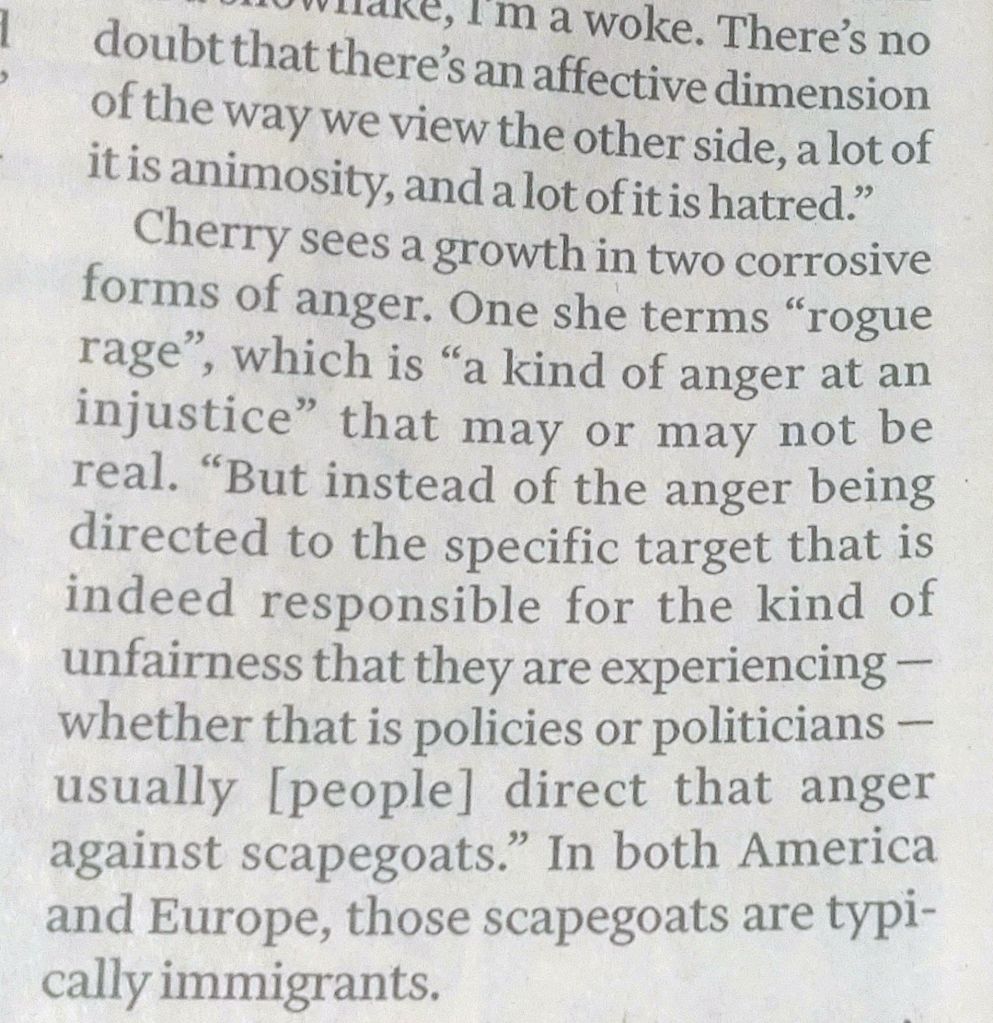
There’s an interesting article in this weekend’s Financial Times, about the emotional side of vote decision-making and how we fool ourselves if we believe that we vote wholly rationally.
This paragraph referencing #Fairness stood out in particular for this blog. Even if the term rogue rage seems a little manufactured, what is discussed does seem a fair description of the mindset of some members of the electorate, and a tendency that some politicians seek to benefit from.
I am happy to confirm as ever that the Sense of Fairness blog is a purely personal endeavour
Being poor brings many disadvantages. A lack of money squeezes options and reduces opportunity. It hampers health and makes ambition harder. But the effects aren’t just direct and physical. They are psychological too. Researchers are beginning to uncover just how debilitating being poor is for effective thinking.
The answer to the question posed in the title Do Financial Concerns Make Workers Less Productive? was a resounding yes. Not only did poor workers whose money troubles were temporarily alleviated produce more, they also made fewer mistakes in production, despite operating more quickly. There is a clear business productivity benefit from this poverty alleviation; and in work that pays piece rates – where workers are paid for their useful output in numbers of products – this alleviation of worry also enabled them to earn more.
In a world of unfairness in which many are kept poor, these are significant findings. In a world seeking greater growth, where growth has been held back by stagnant productivity, they are still more important.
The increase in productivity shown was much greater than that brought about by an increase in the piece rate paid (which in a control experiment was done alongside a cut in base pay so that overall earnings were steady). There was a small increase in output following the piece rate increase, but it was less than a tenth of the change brought about by removing money worries – and there was no discernable increase in the quality of production, meaning this piece rate change delivered much less than a twentieth of the improvement in productivity that alleviating poverty did.
It’s worth noting that the researchers were able to discard alternative explanations of why these workers become more productive. In particular, they specifically discounted the possibility that improved nutrition of the poverty-relieved workers was the cause, because of the speed of the effect of the early payments and the lack of difference in nutritional intake in that short period. The effect is a psychological one: workers who don’t need to worry constantly about money are more productive.
This means that our economies are being held back by workers who are less productive than they could be, simply because they do worry about money on an ongoing basis. GDP growth is being artificially depressed and poverty alleviation could help it recover. This represents a business, investment and economic opportunity.
These findings are depressing. But it’s worse to find that growing up in poverty also has debilitating effects on children.
A recent study finds that poor students underperform their usual standard on maths tests that use real-world scenarios involving money, food or social interactions. It’s not a small effect, either: their performance is on average 18% lower than it is on questions overall – and, the researchers note, it would look even worse if they compared performance against just those questions that are more neutral.
These results were surprising to the researchers, who were expecting to see outperformance in these more practical questions, revealing hidden talent among poor students (they use the jargon low SES, socioeconomic status) that may be untapped by traditional education. That’s the reason why such questions have increasingly been used in modern testing: they are thought to be more accessible to all students. But the result of this study indicates that accessibility comes at the price of triggering distracting thoughts for poorer young people. As the chart shows, performance is worst with regard to questions that refer to money specifically.
Another recent study also found evidence of underperformance on money-linked questions by poor students. It puts this down to ‘attention capture’ as the researcher identified an effect not only on the specifically money-linked questions but also underperformance on more neutral questions asked subsequent to them. It seems as though the question reminds the students to worry about money, and they then can’t shake off the concerns.
These results amount to another example of apparent meritocracy in fact acting to limit the opportunity of those who start with less. As the Fictional Money, Real Costs paper states:
“Examinations are an efficient mechanism to benchmark and rank a population based on a specific set of skills. The notion that they are fair, however, has increasingly been questioned. A significant concern is that performance differences reflect inequities in the testing process itself, rather than differences in underlying skills, and thus may contribute to the intergenerational transmission of existing inequality.”
“We need a major repair that is not going to be found in the traditional economic models that consider the social impact of our decisions as something to be fixed ex post through social policies and redistribution. It needs a major change in the economic narrative, that brings equality and sustainability objectives on an equal footing with productivity and growth when measuring success. And it needs to bring in the private and the financial sector to change the way they define and measure their objectives and actions ex ante.”
Ramos went on to express the hope that the TISFD disclosure framework “will encourage organisations to consider the broader impact of their operations in an ex ante manner and make the social implications of business models transparent … We need to integrate the private sector and the financial sector in the solution because with that we can drive meaningful change that aligns economic progress with positive social impact.”
One of her fellow co-chairs, Arunma Oteh, former World Bank Vice President and Treasurer, and former Director General of Nigeria’s Securities and Exchange Commission, took the opportunity of the launch webinar to invite the investment and business communities to take part in the development of the TISFD standards: “By participating in this process businesses and financial institutions in my view will gain a deeper understanding of how social and inequality issues contribute to systemic risks that can affect financial markets and the global economy.”
Her aspiration is clear: “By standardising how organisations report on social-related issues we can also empower all stakeholders to hold businesses and financial institutions accountable for their social impact.”
These are not small ambitions. It’s clear that the new Taskforce will throw down a gauntlet for both business and the investment community, to think more deeply about the negative implications of business models and investment for society, and particularly the danger that the current approaches further foster inequality. In the language of this blog, the ambition is to instil a greater sense of fairness in business and investment.
Fortunately, there are a few voices from the world of business talking about these issues. Professor Scott Galloway, a successful tech entrepreneur – with an unusual humility for someone with that background – turned educator, is typically excoriating in a recent blog on the US minimum wage: “We have epidemics in the US — depression, anxiety, high blood pressure, homelessness, obesity, and poverty — among young people, particularly men. (Though it’s worth noting here that the majority of people making the minimum wage in the US are women.) The most powerful means of addressing these ills, and the ‘deaths of despair’ that follow, is a good job at a fair wage that acknowledges the nobility of work. In addition, a good job creates incentives and illuminates a path to wealth creation and economic security.” He is clearly referencing the work of economist Angus Deaton, and in doing so highlights the opportunity for investors: economies with fairer pay will prosper more. But Galloway is an unusual figure, in multiple different ways.
Peter Bakker, CEO of World Business Council for Sustainable Development (WBCSD), and former CEO of Dutch logistics firm TNT, talked about the creation of the TISFD arising out of earlier work of the Business Commission to Tackle Inequality: “One of the key conclusions out of that work is that the way that business makes decisions today, the way that businesses are managed, the way that capital markets look and value businesses, does not incorporate the social- and inequality-related risks, the dependencies and the impacts that business actually has on society and on people in it.”
This image from the Business Commission to Tackle Inequality’s flagship publication shows the breadth of what that group sought to encompass. If anything, the breadth of the challenges that TISFD is intending to cover is still greater. The inclusive – even eclectic – nature of the issues covered by the new group readily demonstrated by the failure (at least so far) to find a streamlined name for the Taskforce. It represents the combination of separate groups, one considering inequalities and the other social issues. Of course there are multiple cross-overs between these areas but clearly neither group felt able to compromise over the name.
As well as the spread of its ambitions, the inclusive nature of the TISFD is also shown by the breadth of the backgrounds of the co-chairs. The fourth co-chair is Sharan Burrow, the redoubtable former General Secretary of the International Trade Union Confederation. She noted that TISFD’s aim goes far beyond disclosure: “If we think about it as an end process which is just disclosure then we’re not actually considering what the recommendations must do, which is actually to put up front the sorts of issues that ought to be taken into the business model, the externalities, the risks that must be accounted for in planning.”
Bakker agreed: “Do not make the mistake that TISFD is about disclosures or reporting, because that’s the mistake that everybody always makes in the sustainability world. The reporting bit is the end of a process in which better decisions are made and that’s how you influence the social impacts towards a more positive outcome.”
Bakker went on, and laid down the crucial challenge particularly for the investment world:
“It is partly corporate decision making, partly corporate disclosures, but it’s also about how financial markets will then pick up this decision-useful information and provide incentives for a much fairer and more equal and inclusive world.”
We will see if investors are ready to rise to this challenge.
Powerful stuff – and for this blog, a particularly interesting use of #SenseOfFairness language – from journalist Ash Sarkar (of Novara Media) on this week’s News Quiz on BBC Radio 4, on the societal downsides of imprisoning women.
She did go on to apologise for not being funny on what is intended to be a comedy programme…
Power does strange things to the mind. It increases confidence that you are right. It also makes you less likely to be. It generates a sense of entitlement, which may mean you pay less attention to those with less power. This leads to failures of fairness.
This seems to be some part of what went wrong in recent scandals in the UK: Infected Blood, the Post Office, and at Grenfell Tower. I’ve written in depth about the first two. With yesterday’s publication of the report of the Inquiry into Grenfell, I’m reflecting on that and the wider lessons that those with power should learn, for fairness’s sake.
The horror of the fire at Grenfell Tower, where 72 people died after a series of failures and abuses, was bad enough in itself. But it sits within a much broader context. Ed Daffarn, one of the Grenfell Tower residents to survive the fire, has talked about it being the second act in a three act tragedy. I’d suggest that the other two acts (the ignoring of the views and concerns of residents prior the the fire, and their shocking treatment afterwards) were all about the effect of power, even limited power, and how it leads to errors.
The authorities’ response to Daffarn himself shows this in practice: as an articulate resident willing to express his views, prior to the fire and as the Tower was being refurbished, he was often the one who expressed concerns others were feeling. Rather than being seen as providing a channel for broader insights, the Tenant Management Organisation that ran the Tower on behalf of landlord, the London Borough of Kensington & Chelsea, clearly tended to regard him as a troublemaker. Remarkably, on his Grenfell Action Group blog, Daffarn specifically highlighted the risk of fire in the Tower six months before it occurred, in KCTMO – Playing with fire! (since withdrawn), and others. Daffarn would dearly love to have been proved wrong.
The final Inquiry Report is clear in its criticisms of the Tenant Management Organisation (TMO). These two quotations, the first on an insubstantial and insufficient review initiated to respond to a tenant petition setting out concerns about the refurbishment of the Tower, and the second part of the overall conclusions, will need to stand for the breadth of the damning findings:
“Given the history of the matter and the lack of trust between the residents of Grenfell Tower and the TMO, the board should have realised that only an independent review of the management of the project with particular reference to the residents’ complaints could fairly satisfy the requirements of the moment. As it was, the review was superficial and the group conducting it failed to carry out its investigation in a sufficiently thorough and robust manner. The report lacked balance.” (Para 33.63)
“The TMO lost sight of the fact that the residents were people who depended on it for a safe and decent home and the privacy and dignity that a home should provide. That dependence created an unequal relationship and a corresponding need for the TMO to ensure that, whatever the difficulties, the residents were treated with understanding and respect. We regret to say the TMO failed to recognise that need and therefore failed to take the steps necessary to ensure that it was met.” (Para 33.68)
This response by the Tenant Management Organisation and the Council – and the response by all of those with power in relation to the scandals mentioned – reflects long-standing literature about the poor decision-making and failures of judgement that come from power. In some senses, we shouldn’t be surprised when people in positions of power do act in ways that harm the interests of others, fail to listen to the less powerful, have a tendency to close ranks and deny prior errors. Those failures of fairness are built into power structures. Studies have for years told us that to be powerful is to be prone to overconfidence and error, particularly in interactions with others, and especially in interactions with the less powerful.
Power leads both to over-confidence and to errors. That is, psychological studies show that powerful people – even just those primed to feel powerful by artificial prompts – are more likely to be sure that they are right, and at the same time they are less likely to be correct. Many of those errors are around misreading social situations because powerful individuals have a tendency to imagine everyone should see things the same way as them, and don’t pay enough attention to others to learn that they are wrong.
Power leads us astray.
Power also reduces our inhibitions, so the powerful are more likely to take risks and transgress. The cold power that comes from money affects judgement too, in particular it seems to generate a sense of entitlement. Among the striking outcomes of a series of studies for a paper entitled, strikingly, Higher social class predicts increased unethical behaviour – it’s only slightly less striking when you realise that by social class the researchers intend socioeconomic standing rather than class, at least as that term is understood in the UK – are the tendencies of the wealthier to misbehave in terms of their driving styles. The drivers of more expensive cars are more likely to fail to stop for pedestrians crossing the road, and to cut off other vehicles, in both cases in breach of local traffic law. Those with higher socio-economic status are also more likely to nick sweets from children and to lie about the results of dice throws to their own small financial benefit, the study found.
Perhaps it is not surprising in the face of these sundry negative impacts of power, even of a limited form of power, that authorities in the scandals failed to respond to warning signs from those impacted, and tended to deny that anything had gone wrong or that they had a responsibility to try to put right what could be put right.
As Daffarn suggests, the response of the authorities after the fire was as poor as what came before, in many cases exacerbating the suffering of the survivors. One small example stands for the casual carelessness of those with power, and their failures of fairness:
“When official communications were eventually released, they were in English. That included communications sent to those who had been placed in hotels. People described feeling at a disadvantage because they could not read English well and had significant difficulty in gaining access to services, which they felt created unfairness…In some cases interpreters were provided, but not always in the right language.” (Para 100.60)
The council simply didn’t prepare well enough to carry out some of its key duties, the Report concludes:
“the wider evidence reveals a culture of neglect at RBKC over a number of years towards planning for humanitarian assistance. The existence of an effective plan for providing such assistance would probably have made a material difference to its response to the Grenfell Tower fire” (Para 101.73)
As Keltner, Gruenfeld and Anderson point out, there are many countervailing influences to the negative impacts of power: “many social values and practices, from conceptions of virtuous leaders to institutionalized checks and balances, have as their very purpose the placing of constraints on those with power”. For fairness to succeed, other players with power need to exert it in more positive ways, driving accountability and delivering those checks and balances.
As the evidence emerged in the Inquiry about the shocking misbehaviour of the insulation manufacturers Kingspan and Celotex, part of France’s Saint Gobain (whose illustrious history began with creating one of the greatest symbols of inequality, the mirrors for the Galerie des Glaces in the Palace of Versailles) in gaming fire safety regulations, I worked to encourage investors to seek to hold these businesses to account. Some did make some efforts, but the work had limited bite and ebbed quickly. There were a smattering of votes against individuals one year but these dissipated by the following year, even though the scandalous failures had not changed or been atoned for. That too was a failure of accountability and of fairness. US company Arconic, which supplied the cladding itself (material that sandwiched highly combustible hydrocarbons between thin sheets of aluminium), has escaped with even less holding to account by its shareholders.
The Report’s conclusions regarding each of these companies are as clear as they are damning. The fact that these blunt findings are highlighted in the executive summary itself shows how central the abuses of power by these businesses were to what went wrong:
“One very significant reason why Grenfell Tower came to be clad in combustible materials was systematic dishonesty on the part of those who made and sold the rainscreen cladding panels and insulation products.” (Para 2.19)
“From 2005 until after this Inquiry had begun, Kingspan knowingly created a false market in insulation for use on buildings over 18 metres in height by claiming that K15 had been part of a system successfully tested under BS 8414 and could therefore be used in the external wall of any building over 18 metres in height regardless of its design or other components. That was a false claim, as it well knew” (Para 2.32)
“In an attempt to break into the market for insulation suitable for use on high-rise buildings, created and then dominated by Kingspan K15, Celotex embarked on a dishonest scheme to mislead its customers and the wider market.” (Para 2.28)
“By late 2007 Arconic had become aware that there was serious concern in the construction industry about the safety of ACM panels and had itself recognised the danger they posed. By the summer of 2011 it was well aware that Reynobond 55 PE in cassette form performed much worse in a fire and was considerably more dangerous than in riveted form. Nonetheless, it was determined to exploit what it saw as weak regulatory regimes in certain countries (including the UK) to sell Reynobond 55 PE in cassette form, including for use on residential buildings.” (Para 2.23)
The lawyers representing victims at the Inquiry alleged that these appalling actions by the companies amounted to a fraud on the market, corruption with the most terrible consequences. The Grenfell United survivor campaign group is now calling for criminal charges. I’m not sure that power generally always corrupts, at least the power of those some far distances below the level of absolute power. But power, even of a limited sort, certainly does lead us astray, it does lead to misunderstandings and misreadings of situations. By its nature, it leads to a heedlessness of those with less power. Fairness requires those with power, even if they regard it as only a small degree of power, to lean hard against these natural tendencies. Fairness requires the powerful to temper their power and to listen harder to those who see themselves as without power. Fairness also requires others with different sources of power to exert it and hold them effectively to account. It requires all of us to consider the power that we have, and to keep asking how wisely we are using it.
The Report’s recommendations provide precise specifications of how these checks and balances and added protections should be put in place, but the lessons we need to learn are broader. Let us hope that these fairness lessons of Grenfell (and of the Post Office and Infected Blood scandals and, sadly, others) are learned.
Grenfell: Building a Disaster, BBC podcast, August 2024 The three-act tragedy quote from Ed Daffarn referenced here occurs at the start of the 10th episode, The Final Act, though the whole podcast series is highly recommended
Grenfell: In the Words of Survivors, National Theatre production, July 2023 A stunning play using survivors’ words verbatim, highly recommended: recording available on National Theatre at Home
Power and overconfident decision-making, Nathanael Fast, Niro Sivanathan, Nicole Mayer, Adam Galinsky, Organizational Behavior and Human Decision Processes, Vol 117, Issue 2, March 2012
Power, Approach and Inhibition, Dacher Keltner, Deborah Gruenfeld, Cameron Anderson, Psychological Review 2003, Vol 110 No 2
Higher social class predicts increased unethical behaviour, Paul Piff, Daniel Stancato, Stephane Cote, Rodolfo Mendoza-Duggan, Dacher Keltner, PNAS vol 109 no 11, March 2012 Note that while the title (and the article overall) references social class, this is actually a discussion of socio-economic standing
I am happy to confirm as ever that the Sense of Fairness blog remains a wholly personal endeavour.
In a small (a very small) way, I collect 18th and 19th century company tokens. These symbolise for me the worst of the financial exploitation of the industrial revolution. It was not enough for the industrialists to ruthlessly exploit the excess availability of labour and pay badly the new industrial workforces of their dark satanic mills*. In many cases they also paid not in money that could be spent anywhere, but in scrip – tokens that could only be spent at the company’s own store. Prices there reflected the guaranteed market, so workers were exploited over again. These practices were progressively abolished in England from 1831 onwards by the oddly-named (at least to modern ears) Truck Acts. There is similar legislation to bar such abuses elsewhere in the world – though not everywhere.
As we know, this financial exploitation sat alongside brutal working conditions where injuries and even death were common, accepted outcomes of the industrial process. That was a lack of health and safety gone mad.
We’ve known for a while that the AI revolution depends on a similar exploitation of the health and safety of workers. The stories of the employees of Sama in Kenya, who helped train ChatGPT, are disturbing. The human training of these supposedly ‘artificial’ intelligence systems (ChatGPT is no worse in this regard than its rivals) involves individual people being exposed to the worst things that the draft forms of AI machines produce. As the machines’ training materials are the entire internet, this replicates the biases of the present and prejudices of the past, and includes all the filth that humankind has produced in recent years. The human job is to tell the AI not to produce further paedophilia, repeat racist incitement, and so on – but in order to do that, people need to read and look at truly horrific material.
Sadly, the people who did this work are not treated well. Their mental health disorders are the equivalents of the fingers on the floors of cotton mills. These seem not to trouble those who are making epoch-making amounts of money, and little enters the public discourse so that it has minimal impacts on consumer use of these products.
But it turns out that such physical exploitation of people’s health isn’t all that’s going on in the current technological revolution. Amazon has revived the company scrip model. It pays some of its MTurk workforce in Amazon gift cards, and severely constrains how those gift cards can be spent so that the workers are unable to get full value from them. MTurk – mechanical Turk in full – is the name for the distributed self-employed workers who perform tasks that help test and train much modern IT and so ensure its smooth working. The name aptly reflects the 18th century supposedly mechanical chess board, called the Turk, that toured Europe playing matches. Instead of being an automaton, the Turk actually only worked because in place of a machine there was a skilled human chess player crammed uncomfortably into the space under the board.
In the same way, the human work that is necessary to help train current supposedly ‘artificial’ intelligence technologies suggests there is some artifice in calling them artificial.
The DAIR Institute (Distributed AI Research Institute in full) – the grouping formed by the authors of the Stochastic Parrots paper – have launched a Data Workers’ Inquiry trying to bring forward the stories of the people who are directly involved in facilitating the current technology revolution, and who all too often are its unhappy victims. Consistent with the DAIR philosophy, this includes putting the voices of the individual workers themselves at the heart of the work, and facilitating them in telling their stories in the forms they find most comfortable and appropriate.
One of the stories discussed on the launch webinar, and on which the Inquiry has published a short paper, highlights this issue. Though its author, Alexis Chávez, is from Venezuela, the use of gift cards as payment isn’t restricted to countries where currency or sanctions issues might limit payments in real money: Chávez shows that the practice applies in (at least) Brazil, Colombia, India, Kenya, Mexico, Pakistan, and the Philippines. The paper details the convoluted processes needed for these individuals to gain value from their gift card payments, which mean that they are in effect forced to take discounts of 20-30% in order to extract value. It’s like the mark-up in the company store.
And it’s hard to argue with Chávez: “Even though Amazon does not see them as employees but as independent contractors, it’s our right to be paid fairly and in a useful manner.” We fondly thought the worst of the financial practices of the industrial revolution were far behind us – they should be – but unfairness clearly persists in the very human side of the supposedly ‘artificial’ intelligence business.