
An extraordinary legal case was decided in the UK in April, and it has recently been determined that there can be no appeal from it. The court decision has led directly to the insolvency of a major property development group, and it illustrates the way in which fairness fills gaps in the law – indeed how fairness is a core element of how the law works.
The case is extraordinary because it deploys fairness effectively to overthrow a fundamental element of corporate law. The decision in effect enables the piercing of the corporate veil – the legal barrier that means the liabilities of a company stop at its doors and cannot be claimed from a parent, other group company, or shareholder. Limited liability, through this mechanism of the corporate veil, is generally regarded as a core element of capitalism, a protection of the shareholder providing capital, freeing them from the risk that they might lose more than their contribution to the company through their buying of shares. Because of this perceived centrality to the capitalist system, courts, and indeed legislators, are deeply wary of piercing the veil in the way this decision does.
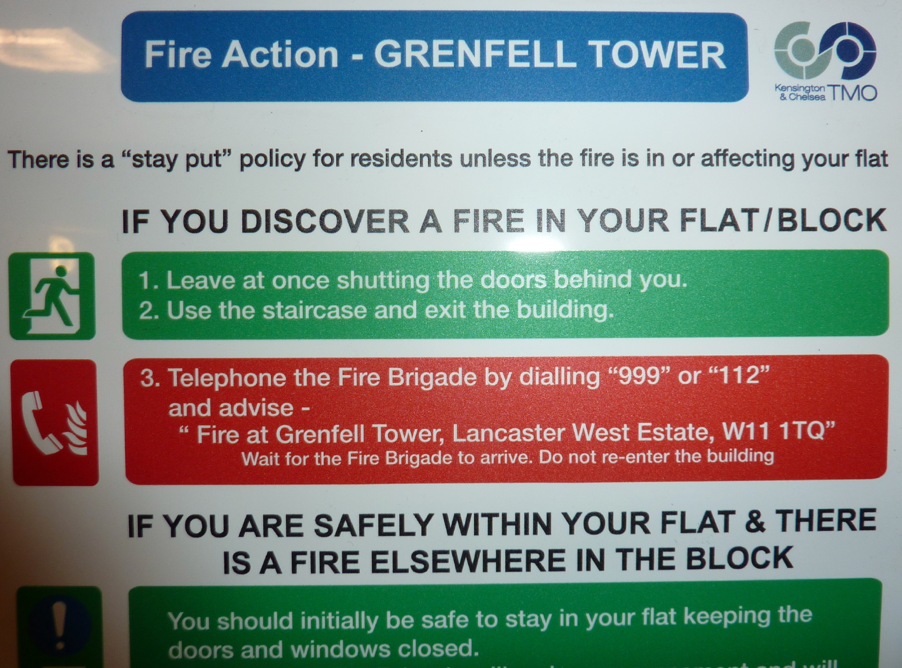
However, there are certain policy aims that are so substantial that such effective veil piercing is seen as necessary. That is true of the policy underlying the law in the case in question, Crest Nicholson Regeneration v Ardmore Construction. It concerns Building Liability Orders, established under the Building Safety Act to ensure that appropriate contributions are made by those responsible for the remediation of buildings which since the terrible Grenfell Tower fire (see Power leads us astray: fairness lessons from Grenfell) are recognised as representing significant risks. Building Liability Orders (BLOs) allow the courts to extend the liability for remediation costs from the immediate company involved to associated companies where it is ‘just and equitable’ (what this blog would call fair) to do so.
I deliberately say that this ‘in effect’ pierces the corporate veil, because it’s worth noting that there is some debate as to whether this is a full piercing, though to a non-specialist this may seem a debate on the head of a pin. As Christopher Veal of leading barristers’ chambers Pump Court explains:
“Whether this constitutes “piercing the corporate veil” in the traditional sense is contested: some courts and commentators treat BLOs as a distinct statutory remedy rather than classic veil-piercing, on the basis that the court is not disregarding the corporate structure but rather applying a legislative override. Others characterise the practical effect as functionally equivalent to piercing the veil. The distinction matters less in practice than the statutory test itself, which turns on whether it is just and equitable to extend liability.”
Even though there is this debate, the case makes clear that sometimes statute and policy considerations will take decisions to extend liability notwithstanding the perceived strong constraint of the corporate veil. This step was seen as particularly needed in the development sector, where there is a history of each individual development being built by a thinly capitalised subsidiary so as to protect the parent, and wider group, from exposures to any potential liability. The immediate subsidiary involved in the development, Ardmore Construction Ltd, had been put into administration on the day before the initial adjudication against it (the judge decided to accept the suggestion that this was coincidence), and the court also found that there had been a corporate restructuring with some intent to limit broader liability. The ruling means that this restructuring has failed: following the court’s decision to pierce the veil, the whole Ardmore Construction Group entered administration in mid-June, and other related companies have sought protection from creditors.
This application of fairness to close gaps in the law isn’t as infrequent as people might imagine. In many ways, it is a core element of the functioning of the common law, under which judges reach decisions that are not explicitly covered by legislation, applying broader judgement and higher principles to do so. Fairness is often one of those higher principles. Think about the famous 1930s case of the snail in the bottle of ginger beer, Donoghue v Stevenson. There would have been no need for the case to reach the House of Lords (then the UK’s highest court) if the drinker of the ginger beer in question had been its purchaser rather than her friend for whom she bought it. If the buyer had drunk it and suffered the consequences, contract law protections would have applied. In the absence of some form of contractual protection for the drinker, the House of Lords applied a more general duty of care to manufacturers and found that the Stevenson business could be seen to have negligently breached that duty of care. From this finding based in fairness has arisen the whole modern concept of the law of tort, whereby in certain constrained circumstances duties of care arise outside of contractual relationships.
In other situations, courts will imply fairness into contracts that on the face of it do not expect it. In her interesting book Fool Proof, law professor Tess Wilkinson-Ryan discusses the Massachusetts Supreme Court case Fortune v National Cash Register. Orville Fortune was employed at will and at a low salary, with his main pay opportunity through commission on sales – a portion paid at the point of sale and the rest on delivery and installation of the equipment. Fortune was sacked between landing a big sale and the point at which he would have received the second part of his commission from that sale. While on the face of the contract his employer could indeed do this, the courts implied a duty of good faith such that National Cash Regiester was not in fact permitted to exploit its worker in this way. Instead, it needed to treat Fortune fairly and allow him to take the fair benefit of the commission he had earned through his sale. The court stated bluntly:
“we are merely recognizing the general requirement in this Commonwealth that parties to contracts and commercial transactions must act in good faith toward one another. Good faith and fair dealing between parties are pervasive requirements in our law; it can be said fairly, that parties to contracts or commercial transactions are bound by this standard.”
Further, there is a whole section of the English legal system fully animated by fairness. It is not by chance that this is called ‘equity’, now formally combined with the rest of the legal system but with its origins in a mediaeval court system focused on delivering fairness. As Alastair Hudson states in the opening words of the seventh edition of his Understanding Equity & Trusts: “Equity is a means by which English law ensures fair outcomes in individual cases where the strict application of the common law or statute would otherwise generate injustice.” In practice, the concept of equity applies somewhat more narrowly than this assertion implies, but the intent is to identify the fair outcome when there is a lack of clarity in the common law or in statute. Equity lies at the heart of trust law, and so as I explore in my forthcoming book, the sense of fairness animates the fiduciary duties with which trustees are vested.
Hudson develops the thought further in his Great Debates in Equity and Trusts, recognising the need for the equity approach to soften the edge cases of common law and statute, so as to ensure that the legal system overall is “rounded”. He argues: “Clearly, there need to be rules … However, there will also be situations in which the ‘letter of the law’ will not necessarily produce an ideal response, or worse, a positively unfair response. There will be situations in which people need some flexibility in which to create new models which will work better for them personally or better in unanticipated situations. One future for the UK economy is likely to be in the creative field and in the new frontiers of technology. By definition, an innovative economy may need innovative legal models … to maximise its success. Therefore, non-rigid ways of thinking will be important.”
He concludes: “a legal system needs a synthesis of strict rules (of the sort typified by statute and by common law) and mechanisms for achieving fair outcomes when the strict rules will not achieve that”.
The extent to which fairness will require further substantive upendings of traditional legal understandings such as the Crest Nicholson Regeneration v Ardmore Construction piercing of the corporate veil remains to be seen. But it seems clear that fairness will continue to be needed to fill gaps in, and round off the edges of, the common law and legislation.
See also: Power leads us astray: fairness lessons from Grenfell
The limited responsibility company, or the tale of the unnatural revolutionary
I am happy to confirm as ever that the Sense of Fairness blog is a purely personal endeavour.
Crest Nicholson Regeneration v Ardmore Construction [2026] EWHC 789
Crest Nicholson v Ardmore [2026] EWHC 789 (TCC): A Landmark Decision on Building Liability Orders, Christopher Veal. Pump Court Chambers, 22 May 2026
Donoghue v Stevenson [1932] AC 562
Fool Proof: How Fear of Playing the Sucker Shapes our Selves and the Social Order – and what we can do about it, Tess Wilkinson-Ryan. Harper Collins, 2023
Fortune v National Cash Register Co, 373 Mass 96 (1977)
Understanding Equity & Trusts, Alastair Hudson. Routledge, Seventh Edition 2022
Great Debates in Equity and Trusts, Alastair Hudson. Macmillan, 2014

