This is a version of my speech from the (very enjoyable) London launch event of my book, on October 29th 2026. A version, because as I spoke without notes so these aren’t the exact words that I actually said!
When I first worked in the City, I wasn’t actually working in the City. Before we moved to Portsoken Street, Hermes’ offices were just along from here, on the east side of Mansell Street, and the official bounds of the City ran straight down the middle of that street. It’s less stark now, but there are still streets in this area where you can see one one side of the street the steel, glass and concrete and the wealth of the City, and on this side the bricks and mortar and the poverty of Tower Hamlets, where we are now. I know of no better symbol of the unfairness of our world, and how it gets oddly fixed and ossified than that the arbitrary choices of the Romans in choosing the boundaries of their settlement 2000 years ago are still reflected in a divide between wealth and poverty today. And this place, and the organisation it hosts, Toynbee Hall, works with the poor of this poor borough, and they often use the language of fairness talk about themselves.
That’s why we’re here.
Why we are here, though, is of course this little book, Fairness in Business and Investment. We all feel unfairness viscerally, and it’s not just that we here are a self-selected bunch. Rather, fairness is core to the human condition, it’s been a foundation of our social success as a species, it has been shown to be hard-wired in our brains, and been demonstrated to be present in children of ages all the way down to 15 months. And the thesis of my book is that when we as business-people and investors fail to be fair, we are not just denying something core to our humanity, we are worse at business and investment. For being fair delivers better business and investment, and delivers more prosperity for the long-term.
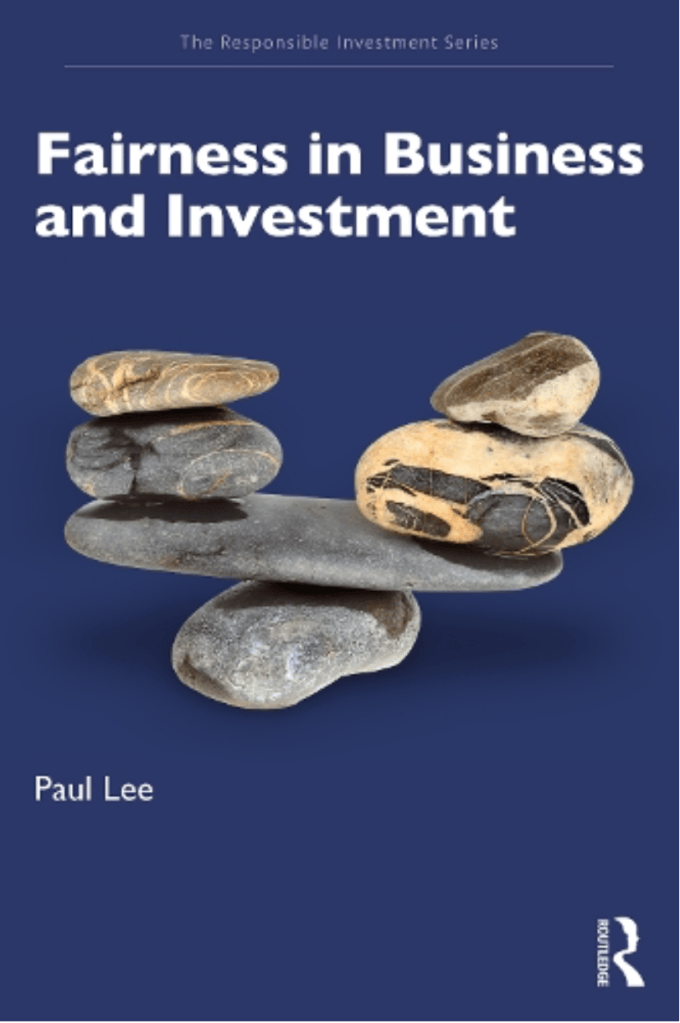
The book is in 3 parts, introductory, then fairness in business and fairness in investment.
As part of the introduction, I look at how consistent fairness is across cultures around the world. The ultimatum game shows this. I give XX £20 that she must share as she chooses it with YY – and they will get to keep their chosen shares if YY accepts what she’s offered. Economists argue that XX should make a low offer, and YY accept any money that is offered, because it’s free money (at least for you!). But of course that’s not how it works. Almost everywhere in almost all conditions, the most frequent offer, the mode, is 50%; the mean is often a bit lower, but still usually in the low 40s%; and offers below around 20% or 25% are almost always rejected. Fairness is shown to be – almost – universal. There is a key exception to the fairness shown by the ultimatum game, which I’ll come back to later.
Also in the introductory section, I discuss fairness of process, including the crucial issue of the Rule of Law. And I discuss fairness of outcomes, including the question of meritocracy. We all so love fairness that we want to believe that we live in meritocracies, and we’re often willing to believe that those who are suffering somehow deserve their misfortune, even when we happen to know for sure that’s not really true, and even when we doubt the genuine existence of meritocracy. I was at an event a couple of weeks ago and someone asserted that ‘no one believes in meritocracy any more’, in the sense that no one believes that we do live in meritocracies any more. But sadly that’s not true. Exactly the wrong people believe in meritocracy: those who succeed tend to, they believe they merit their success, think it is based on their skill and hard work alone, and are willing to ignore advantages they had or the role of just plain luck. And if they fall into that myth of meritocracy trap, it turns them into the most awful people. They drive aggressively, cutting up other traffic. They cheat in tests. They literally steal sweets from children. Successful people really can be awful human beings in their personal lives; who knows how they might act in their working lives?
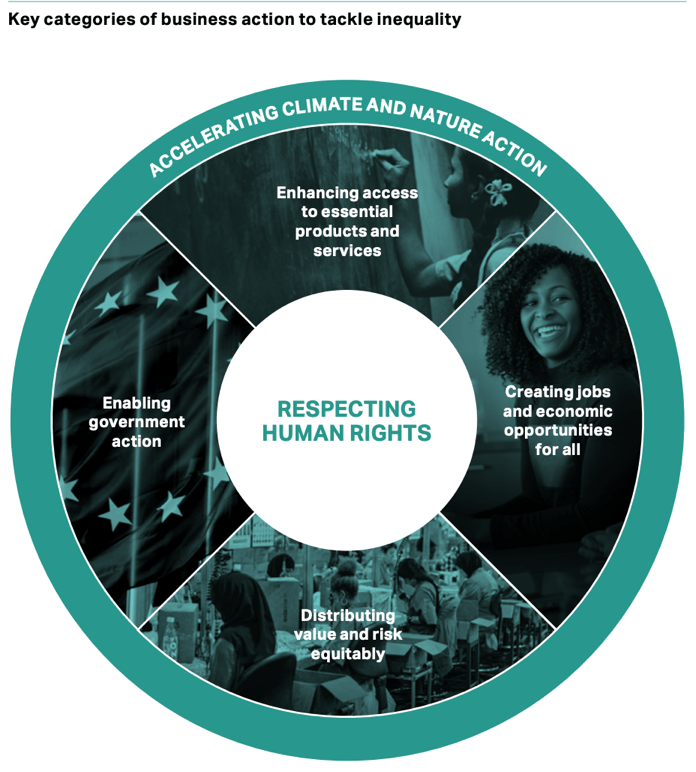
The core of the book is the section on fairness in business. Here I look at each of the main stakeholder relationships, as set out in s172 of the Companies Act – employees, customers, suppliers, communities and so on. For each of them I consider what fairness looks like in relation to that stakeholder, what the benefits of fairness are, and something about the current state of play (usually not as good as it could be). I use the s172 list because I think it’s a useful articulation, not because I want to be narrowly British in the analysis – in fact when I share that ‘enlightened shareholder value’ approach with directors as part of the training I do, directors from around the world recognise it as a clear articulation of their duties, what they think the job of boards is, and what they think companies are there to do. And I show that even in the supposedly narrowly shareholder-focused US, actually the law properly understood is much closer to that articulation of enlightened shareholder value.
Of the s172 stakeholders, there’s probably least evidence for fairness making a valuable difference in the case of the environment. I think that’s because that relationship isn’t mediated through humans, and so isn’t subject to the push and pull between people that is often the source of fairness. But even there I find evidence of the need to strike a fair balance. And I go all the way down the list of s172 stakeholders, including corporate governance and good business conduct, and fair dealing with shareholders. I cover dual class shares, and the accounting and reporting wonks among you will be particularly pleased to know that I cover true and fair, as well as fair, balanced and understandable and Fair Disclosure (Reg FD) in that section. It’s striking how central fairness is to the language we use when we talk about the corporate relationship with its investors.
But it’s odd that we use fairness rather less in our expectations of investors themselves. So, to move to the final section of the book, fairness in investment. This section is rather less evidence-based and rather more aspirational than the fairness in business section. And the reason for this is that there is simply much less experience of fairness operating in the investment world, on which such evidence might be founded. Someone here’s employer has just launched an advertising campaign based on their being the fair pension and investment provider. While normally I love to see fairness in marketing, seeing it being applied as a core differentiator in the investment world depresses me a little.
And it’s here also that the outlier in the ultimatum game comes in: when researchers merely briefly called it a ‘Wall Street game’ when introducing the rules, the outcomes were very different, with initial offers much less generous and much greater acceptance of lowball offers. We fundamentally believe and accept that Wall Street, that the investment world, is less fair than the real world.
And that’s ironic because the foundation of all investment is the concept of fiduciary duties, that we’re looking after other people’s money and therefore must care for their interests above all. People in investment proudly talk about themselves as fiduciaries, as they should. And here’s the thing: fiduciary duties arise from that branch of the legal system known as Equity, which as the name suggests seeks to deliver fair outcomes whatever a strict interpretation of the law might be. So it is odd that investment, which is based on fiduciary duty, and so founded in equity, is not actually expected to be fair.
Fairness proves a valuable way to illuminate other key challenges in the investment world too, including stewardship, systemic risk and short-termism. The final nugget I’ll share is on short-termism, which we measure in investment using discount rates – the amount by which future money is worth less than money in the present. With the scale of our long-term problems, we desperately need to be thinking more long-term and so have lower discount rates, valuing the future more. But there’s a finding that in conditions of inequality – which obviously we are currently in – people have higher discount rates, they discount the future more and focus more on the present. There’s some logic to it, as inequality increases the risk that we may not be around to enjoy the future, and we may not have the funds to enjoy it. But the researchers argue that it’s more a psychological outcome than a logical one, and given that they’ve shown other psychological effects on discount rates (not least that men become much more short-term while in the presence of an attractive woman) it’s hard to argue with them.
So not only does unfairness exacerbate many of our future problems, it also constrains our ability – or at least how we perceive our ability – to deal with them.
So, in short, fairness matters to us as humans, deeply, viscerally. We miss something fundamental if we close our minds to it in our business and investment lives. Businesses need strong stakeholder relationships, all of which are stronger if mediated through fairness. Investment ignores fairness at its peril, risking the strength of customer (fiduciary) relationships, bringing systemic risks and limiting the ability to address them, getting timeframes wrong and too short-term, not least because of excess discounting. Yet we are human, and we shouldn’t allow the Wall Street game to have different fundamental rules to the rest of our lives, or be fooled by success within what we hope are meritocracies but really aren’t.
Fairness matters, and we will succeed more in business and for our investment clients, if we believe that and act more vigorously on it.
I’m happy to confirm as ever that the Sense of Fairness blog, and indeed Fairness in Business and Investment, are purely personal endeavours.
Fairness in Business and Investment, Paul Lee. Routledge, 2026